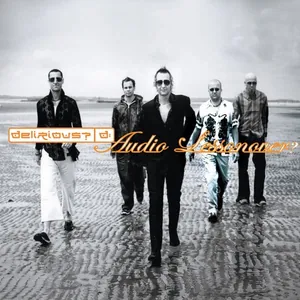
What? There's another new Delirious? album out already?!
This surprised statement has probably been made several times in the last few months by D: fans on both sides of the Atlantic. Ever since the British fivesome helped to usher in the modern worship revival over there a few years ago (which spread like wildfire to the States with songs like "Did You Feel the Mountains Tremble?", "Shout to the North", and the omnipresent "I Could Sing of Your Love Forever"), a new album has fallen into the hands of eager fans at a quick pace of roughly once a year. Those who follow bands closely know that the average time it takes a band to cycle through one album, with all of its radio singles and promotions and touring, and finish writing and recording the next album, is about one and a half to two years - perhaps more for groups like dc Talk who hone their craft more carefully and indulge in more side projects in between. So it's a bit of a surprise to us when Delirious? (yes, the question mark is part of their name) manages to put something new out practically every summer.
Now, this isn't necessarily a bad surprise, except for the fact that their American label (Sparrow Records) feels the need to dampen the hype by delaying each album release over here in the US longer than necessary. When the band first signed on in 1998, Sparrow rushed to get Cutting Edge (two discs worth of the band's original worship songs from their formative days) and King of Fools (their first true rock album) into our hands within months of each other, leaving a few of us confused as to how much of this new group we could handle all at once. (I had been lucky enough to be clued in early, having received a tape of King of Fools from a friend in Scotland for Christmas '97.) A more experimental studio album, Mezzamorphis, followed in summer '99, which took a bit of getting used to and saw less success than its more straightforward predecessors (though it resulted in an amazing US tour). Then came 2000's Glo, an incredible worship album with a more modern flavor than Cutting Edge, and now, a year after that, we have Audio: Lessonover.
Well, sort of. The UK has had it since August. It's a general rule that a lot of foreign bands have to wait a few months before their albums hit US shelves - even U2. By the time we get them, sometimes a few tracks have been added, dropped, or otherwise rearranged. Usually not a big deal. With the exception of Glo, each American release from the D: boys has differed slightly in terms of its content - we usually get an extra song or two and maybe a remix. And each album has had different cover art. I suppose that all makes a few months' wait worthwhile for some people. But this time around, the US won't see the new album until the following spring. And I have my not-so-nice ideas as to why.
You see, the US Christian music scene doesn't want to let go of this worship phase it's going through. I think it's great to have so much original worship music available from so many bands, but it's getting to the point where too many record companies are cashing in on a trend, and the whole thing is getting very repetitive and uninspired. Bands who wouldn't normally record worship music sometimes think that all they have to do is dumb everything down and paraphrase Bible verses. That approach just doesn't work for some songwriters who are otherwise brilliant artists. Delirious? has always been excellent at writing worship songs, but that's not all they do. They can be very focused when they want to (as seen on Glo), but they can also be diverse. Audio: Lessonover very smartly veers away from this trend altogether, focusing mostly on songs about relationships and songs of encouragement to the church, definitely taking time to praise God in different and clever ways, but not coming anywhere near anything that could be used in corporate worship. Many American listeners will likely see this and cry "sellout", as some already did upon hearing Mezzamorphis two years ago. I personally think it was a smart move for them to buck the trend and explore the possibilities. Musically, the approach is mellower and more atmospheric, save for a few rocking tracks. It's not nearly as easily accessible as Glo. Comparing Audio to Glo may not be as drastic as comparing, say, U2's Zooropa to The Joshua Tree, or Radiohead's Kid A to The Bends, because there's still a little more structure here and the album doesn't feel as piecemeal as the more experimental works of the aforementioned bands (both of them are bands that Delirious? gets compared to a lot, by the way). There is a common thread in that Audio is very much one of those albums that grows on you.
Sparrow Records didn't think we were ready for this, though. So what did they do? They gave us a double disc rehashing the group's best-known worship songs, entitled Deeper, after their biggest radio hit in the US so far. This is why we have to wait so long for Audio, and this is why UK listeners are left scratching their heads, not understanding why we got some "new" material from the band before they did. I won't get into the politics of the whole situation, since I'd only be speculating. But I do plan to tell you why nearly every single one of the new songs makes it worth your while to skip Deeper altogether and do what it takes to get Audio straight from the source instead of waiting for Sparrow to get with the program.
"Waiting for the Summer"
You might not even recognize the lead single as Delirious? at first. I wasn't quite sure what the boys thought they were doing when I first heard this one - it's about as poppy as the band has ever been. Sure, it's still got strong guitars and drums and it's a rocking good time, but the melody and the female backing vocals can be a bit too fluffy to handle at times. Lead singer/songwriter Martin Smith was definitely in a happy, lovey-dovey mood when he conceived this one. I think the lyrics were written for his wife, and they seem to make interesting references back to another summer song, the very moody B-side "Summer of Love". It's almost like Martin is looking back at the difficulties dealt with in that song now that he and his wife have overcome it, and he's celebrating with his "beautiful one". The lyrics do border on trite at times, especially when Martin closes the song with "It's a beautiful day" (a line which he already used in "Everything" on Glo, barely escaping accusations of U2 by slightly predating the release of their smash "Beautiful Day" - they can make no such excuse this time around!), and I'm sure I'd want to shoot those backup singers if I was forced to hear this on the radio all the time. All the same, I suppose the mood is appropriate for a "summer song", so if you're in Australia right now - enjoy! You'll certainly get your hands on the CD sooner than we will.
"Take Me Away"
This album opens with a twin attack of happy love songs, though this one outshines its predecessor by far. It opens with a moodier keyboard sequence and more interesting chords, and it's a much more kicking rock track than "Waiting". It's probably the catchiest track on Audio, complete with a cool drum solo, which leads into an equally cool guitar solo after Martin's lively shout of "Hey, hey, hey, hey!" The lyrics are probably even more trite than "Waiting", basically stating that Martin's in love with a girl and she takes him to emotional heights he's never experienced before. The female vocals are still present, though they're not as obtrusive here. It's a better balance between sweetness and aggression, and I really hope this one gets a chance to ride the American charts for a while. The boys actually decided to be philanthropists when releasing this single to the UK, opting to make it available for free download at mp3.com (I believe you can still get it there - so go grab it!) instead of selling it through traditional media outlets. Of course, that decision might have been due to poor sales of the "Waiting for the Summer" single. (Apparently CD singles are a bigger deal in the UK.) In my opinion, this song is superior despite some pretty cheesy lyrics, and it very nearly makes the existence of "Waiting for the Summer" unnecessary.
"Love Is the Compass"
The band settles into a mellower mood on this one, opting to keep things more vague and less saccharine than the first two tracks. Unfortunately, it's one of those mid-tempo tracks that comes close to being pure filler. It tries to save itself with some more interesting lyrics ("I tried to save the world but it fell upon my shoulders"), but I don't think it succeeds in being all that memorable. To tell you the truth, I can't even make out the second line of the chorus, which is frustrating, because I can't find lyrics for this album anywhere on line. Martin's enunciation might need a little work on this album - his voice is very gutsy and in your face, but sometimes it sounds a bit forced, putting him at risk of being lumped in with Scott Stapp of Creed in the category of egotistical frontmen.
"Alien"
Some spacey noises bleed over from the last track into this one, creating a nice ambience for a definite mood piece that ends up being one of the highlights of the album. Martin's voice sounds more distant, effectively passing along his feeling of wandering in a strange land where he doesn't seem to fit in. As the song builds, guitarist Stu G. adds to the disoriented mood with some distorted guitar strokes (and a fiery solo later on), and Stu Smith plods along on the drums and cymbals, creating a driving but slightly detached backdrop that will remind many people of Radiohead. It's a lot like what Radiohead would sound like in between OK Computer and Kid A, I think, though Martin isn't alienated in the same way Thom Yorke usually is. He feels alienated because he is experiencing grace for the first time - "Why does the sun shine on my guilty face?" Lyrics like that are what make this song a true standout. One criticism, though - the band should be more careful not to reuse the same phrases so much. When Martin pleads "Take me away to a higher place", it's a bit too easy to confuse this track with track two, which is usually still lodged in my brain because it's so darn catchy.
"Angel in Disguise"
This song is captivatingly lovely from the outset - opening with an interesting piano melody and the puzzling lyrics "Wake me up, shake me up, break me up and put me back together". The rhythm is a swaying 3/4, and the mood is both light and dark at the same time. Unfortunately, the song is slightly marred by Martin's seeming inability to back off. His voice seems to nearly break at times during the song, and I'm tempted to think he had to have recorded better takes than this. He just gets a little whiny, and it makes the transition between verse and chorus a bit jarring. I was put off at first by the shift to a 4/4 rhythm for the bridge, but it's a beautifully orchestrated instrumental, and it really does fit with the song, so I love it now that I know when to expect the rhythm to change. However, they still lose a point for the line "Call my name, somebody take me away". Hey, guys, can we do a song without saying "take me away" for once?
"Rollercoaster"
A mid-tempo drum loop kicks in as the pace of the album begins to pick up again (those who were expecting another catchy rocker are going to have to wait for just one more song). More moody keyboards tinker around in the background, creating a soundscape that reminds me of Collective Soul's "Crown", sped up to a more accessible pace. The lyrics seem to deal with a topic similar to Lifehouse's "Sick Cycle Carousel", but maybe it's just the amusement park theme that's got me thinking that way. It seems to be about a cycle of sin that Martin can't escape. It's an okay track, I suppose, though the band pulls another tempo change on me by slowing it down for the bridge and then speeding up again. I'm not a big fan of slowing down a song in the middle, so I always find that part rather irritating. On the plus side, the production is intricate and quite well done, and it's good to see Delirious? experimenting and not aping any other band too obviously.
"Fire"
A chunkier guitar riff opens this one - this is probably the most muscular rock track found on the album. It might even be a bit jarring in between all of the softer tracks, but I think it's kind of needed at this point to keep the album from falling into a slump. It's not even that the tempo is particularly fast - it's just got a solid rhythm section and some tasty guitars that zip in and out as Martin describes his apocalyptic vision of fire coming from the sky. It's a lot like U2's song "Elevation", in that it's electronically driven and Martin hits some pretty high notes at times. The song seems to be about leaving behind your comfort zone and taking part in some sort of a spiritual revolution. I love the gang vocals on the chorus - the refrain of "I, I, I believe", reminds me very much of the brilliant techno-rocker "Bliss" from Mezzamorphis. Martin's manic street-preacher approach works well with the energy of this song, right up to the fervent coda that brings the song to a sudden halt.
"Angel"
The title of this track might actually be "There Is an Angel", but in any case, I kind of frown upon a band having two songs with such similar titles - especially on the same album! But let's forget about that. The song comes sweeping in very softly, like a breeze through a bedroom window. It seems to be an apology of sorts from Martin to his wife, though I'm not sure exactly what he's sorry for. He definitely wants her to know how much she means to him, and it's really sweet to hear him softly croon "There is an angel and she's lying next to me." To Martin's credit, he manages to rein in his vocals on this one, keeping it very soft and intimate. There is a noted lack of guitar here - the track floats along on keyboards and a consistent thump on the drums. It's like an even quieter version of "Intimate Stranger" from Glo, and it's actually quite refreshing to see that Martin can write moving love songs for his wife in much the same way he does for his Savior.
"Bicycle Gasoline"
Martin's wife sure is getting a lot of attention on this album! A strange mechanical noise leads out of "Angel" into this track, which has got to have the weirdest title of any D: song so far. At first, I was getting annoyed by this point that there weren't more faster songs, and this track struck me as rather obtuse and uninteresting. It's actually got a nice melody to it - it just doesn't jump out at you as much at first. The lyrics confess that Martin's life seemed emptier before he met his wife - it's almost done in a self-deprecating fashion: "When I met you I was half a man/I couldn't walk but together we ran." Taken out of context, the song could come off as a little too needy, especially coming from a band who so boldly proclaimed their true first love on Glo and who has an admittedly more parabolic approach to their Christianity on this album. The chorus is just plain confusing: "She don't need no bicycle gasoline/She just needs her violin". Actually that last word could be "violet" or even "violence" - again, I can't find the lyrics and Martin isn't terribly clear. Still, I think it's an intriguing song, with Stu G.'s gentle guitar lines following Martin note for note in the chorus, and with the last chorus left unfinished to give the last line an unexpectedly different meaning. The way it hangs unresolved and leads into the next song is very much like Coldplay's "Yellow" (no surprise, since Martin apparently liked Coldplay before anyone in the US had heard of them.)
"A Little Love"
This one tricks you into thinking it's another slow, gentle number - some might not even notice that the track has changed between the last song and this one. However, the mood is different, and if you listen to the vocals during each verse, you'll notice that it's not Martin singing, but Stu G. Stu may have co-written this one - he's an interesting songwriter in his own right, and the lyrics are definitely enigmatic here: "Discipline is the bullet in my gun/Freedom is the thing that keeps it fun." I think the boys were just itching to push the envelope of what a good Christian band is allowed to say, frankly, but in any case, it's a strange contrast to the peppy, simple, upbeat chorus: "All you need is love/Just a little love to get us through." It almost feels like two completely different songs morphing in and out of each other - one modern, alternative, and moody, and the other very straightforward and "classic" rock style, with one running at exactly half the tempo of the other. And it's actually a pretty good song, despite my initial confused reaction.
"Show Me Heaven"
Apparently, the guys wrote this one last year, but it didn't really fit well with the other songs on Glo, so they left it off and gave it a home here. (Thank God they didn't write it for Mezzamorphis - there's already a song called "Heaven" on that album!) For the most part, it's a fun, upbeat rock track - not as hard-edged as "Fire" or "Take Me Away", but also not as overpoweringly happy as "Waiting for the Summer". The band just lets loose and has a good time as Martin describes the joy of having overcome fear, standing in eager anticipation of what God is going to do next. It was clearly made with the group's live show in mind - Martin even yells, "Come on, Stu G!" right before Stu rips into a great guitar solo - which is slightly marred by the fact that the guitar keeps jumping from the left speaker to the right speaker and back - very distracting if you've got headphones on. One other distraction is yet another rhythm switch right before the chorus - it jumps into 3/4 and then back again, which really doesn't seem to fit at first. It's not such a big deal that I'm used to it, but it might hurt the radio-playability of this one. Then again, I have to give the band credit for not bowing to the pressure to be totally radio-friendly.
"America"
This one comes off as a bit preachy - Martin points out how a few countries around the world are really hurting and have very dark histories, and he just seems stuck in the sixties as he tries to rally everyone together during the chorus. The song has struck a chord with listeners after September 11th, when the band made both this and "White Ribbon Day" (a classic track from King of Fools) available for free download at fans' request, but its title is a bit of a misnomer, as it only really talks about America in the first stanza. It's another one of those mid-tempo songs that kind of bounces by without having much of an effect on me, though I really do like the horns that break in mid-way through. The barely audible lyric that Martin ends on is interesting, too: "Everybody, come on/You don't have to believe to belong." I would assume he means that Martin isn't only speaking to Christians in his call for world peace, but I'm guessing some more conservative listeners might take that line out of context and attack the band. It wouldn't be the first time - Delirious? has a characteristically British habit of saying things the way they want to without apology. (Frankly, I like that about them.)
"Stealing Time"
This eight-minute plea for a little quiet time is the closest thing to the spontaneous jams of Glo and Cutting Edge that you'll find on this album. For those expecting the straight-forward worship lyrics and pretty melodies of songs like "Jesus' Blood", "Thank You for Saving Me", "Intimate Stranger", etc., you might be a bit disappointed. This one has more in common with darker Psalms like "Obsession" or "Blindfold" - its melody is almost dirge-like, and the backing music takes on that detached Radiohead style once again. Still, Martin is addressing God directly here, saying "I need a lonely day with You." The song has an almost sci-fi feel to it, giving me a picture of a man slipping out of the continuum of time so that he can be unnoticed and without distraction as he prays. A few random keyboards and blurting horns repeat as the track closes out - it might be a bit indulgent, and it certainly pales in comparison to the "Glo in the Dark" tracks, but it's still a good "official" ending to the album.
"All Around the World"
The album's hidden track is all Stu G., playing his guitar, and rambling on about how he's making art. It has a very odd melody and doesn't really seem to make much of a point - it almost seems like he snuck into the studio late at night, took five minutes to write down some simple rhymes, and put it all to time. It has a certain charm, and I have to give him credit for using the word "Balderdash" in a song, but I sure hope he doesn't plan on quitting his day-job.
Though it took me a while to get used to Audio: Lessonover, I'm glad that Delirious? took the time to get schooled in a new method of thinking about how they record music. It's much like how Jars of Clay was encouraged to grow and stretch for If I Left the Zoo - it may have resulted in a more offbeat and less solid album than some of their previous efforts, but such growth was preferable to a rehashing of all the fan favorites. Delirious? may seem a bit obsessed with finding mainstream success in the UK at times (this is definitely the least blatantly Christian of any of their albums), but we have to remember that there really is no Christian music scene in the UK - bands have to sink or swim on their own merit. And Delirious? is already packing out stadiums with concerts that clearly show the band's faith - they're not out to hide their light. They just don't want to be trapped in a trend, and I think they gain credibility for not rehashing Glo. So check this one out and give yourself a fair chance to warm up to it, when you are finally able to get your hands on it. If you can stand to shell out a few extra bucks, then by all means, order it from the UK and let Sparrow know they made a bad move. (Okay, I'm off my soapbox now, I promise.)
David's Score: 4/5
Other coverage for this album
Decapolis August 2002Reviewed by Matt ModrichDelirious is known in the United States as a worship band, but across the ocean they are part of the mainstream scene in the U.K. Because of that dichotomy their music is often out in Europe long before it hits the States. Such is the case with "Audio Lessonover," which has been out since last August, but is scheduled to be released in America with a live disc this fall. Many traditional…The Phantom Tollbooth 2001Reviewed by James StewartIt is strange that what is perhaps Delirious' most accessible album to date has so far been their least successful in terms of chart placings. Perhaps they're no longer the youth group darlings they once were or perhaps they haven't pushed the publicity machine as hard as they used to, but in its first week of release Audio Lessonover barely scraped into the top 60. It is particularly strange…Similar sounding releases
 2002RhubarbSlow Motion
 2001OursDistorted Lullabies
 1998SemisonicFeeling Strangely Fine
 2005DecibullySing Out America
 2001The Minus 5Let the War Against Music Begin
 2002The DamnwellsPMR + 1
More from Delirious?
 1998D:Tour Live
 1997Cutting Edge
 2002Access D:
 2001deeper: the d:finitive worship experience
 2004UP: Unified Praise
 2000It's OK (Single)