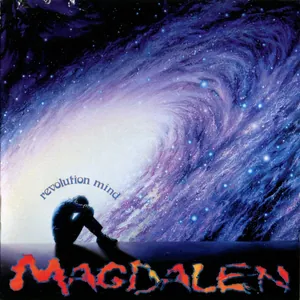
Anybody who has followed Lanny Cordola's musical trail over the past few years should know by now to expect the unexpected. His two solo albums were good introductions to the fact that this man clearly is not interested in sticking to just one musical path when there is a whole world to be explored. He has pursued blues, jazz, rock, funk and folk-sometimes in their purer forms, but usually blending them into some sort of hybrid. Along the journey he has forged some musical relationships with like-minded individuals, such as Philip Bardowell and Chuck Wright, his compatriots in Magdalen. The first fruit of this particular union was Revolution Mind, the debut of Magdalen that came out last fall. (A previous partnership between Cordola and Ken Tamplin under the name Magdallan produced Big Bang, an all together different animal).
A mixture of funk, rock, blues and soul, Revolution Mind was one of the more original releases to come out on a Christian label. Bardowell has a distinctive and powerful vocal presence. Mix that with Cordola's well-known guitar talents and Wright's solid bass, and you've got a pretty potent concoction.
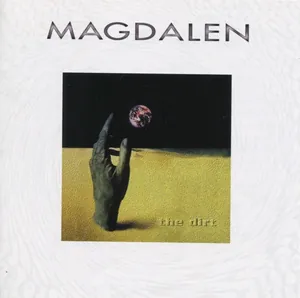
The second release from this triumvirate, a six-song EP entitled The Dirt, takes a stylistic detour into the acoustic rock arena. It would be easy to assume that this is just another band jumping on what has become the endless MTV Unplugged wagontrain. Unlike the vast majority of the recordings that have been spawned by that program (which was initially a good idea), Magdalen has created an eminently listenable project. Instead of just unplugging their amps, the band has chosen to incorporate a lot of ethnic and folk instruments on the album, giving it a whole new dimension.
The theme of the album is encompassed in the C.S. Lewis quote printed in the liner-"It is when we notice the dirt that God is most present in us." Two covers and four originals comprise the song lineup, and they either comment on the destructiveness of man or draw portraits of hurting, "dirty" individuals. The two covers, "War Pigs" by Black Sabbath and "Redemption Song" by Bob Marley, are interesting. "War Pigs" starts with snippets of news broadcasts about various military conflicts that have occurred during the last century, which sets an ominous tone for a commentary on man's penchant for settling disagreements with force. "Redemption Song" begins with a clip of Martin Luther King, before moving on to make the statement that, regardless of what injustice and wrongdoing occurs in the world right now, ultimately God is sovereign.
The four originals are every bit as strong as the covers. My favorite is "Shotgun Shack." Co-written by Bardowell and Cordola, it paints a vivid picture of the situation that a lot of individuals find themselves in when they are trying to fill the emptiness that they have inside with something other than God. The calliope woven into the ending serves as a aural reminder of the tragic merry-go-round that a lot of people find themselves on with drugs and alcohol.
Bardowell's distorted vocals add a surrealistic feel to "The Rapture." (Of course, that event is probably going to seem pretty surreal.) The song has a Middle-Eastern flavor, and is just plain cool.
The EP finishes out with "Bourbon Way" and "Street of No Hope." Lyrically, they continue the theme of people damaged by life's difficulties and struggles. Musically, they bring more folk instruments into the mix, finishing the recording off with a memorable ending.
Cordola has displayed his respect for the writings of Lewis in other recordings-"The Obstinate Toy Soldier," an instrumental piece on his solo project Of Riffs and Symphonies, is the title of a chapter in one of Lewis' most popular works, Mere Christianity. Cordola cited Lewis as inspiration for "The Final Sermon," a song on the recently released Shades of Blue project. It makes one wonder-is it just a coincidence that the spelling of Magdalen is the same as the college in Oxford where Lewis held his professorship? Probably not. At any rate, if the writings of Lewis can inspire this kind of work, let's hope the guys in Magdalen renew their library cards.
Other coverage for this album
Heaven's Metal #52Reviewed by Doug Van PeltHere's a record I've been curious about for a long time -- an acoustic EP by Magdalen. Hmmm. They've got tremendous talent and are good songwriters. Once I put it on, I realized my expectations of a Guardian sound-alike were way off base. This stuff is much more clean. I mean, these guys utilize cello, violin, sitar, tablas, accordion, and a myriad of other instruments. What is achieved is a…Similar sounding releases
 1993Shack of PeasantsGospel Blues Volume 2
 1994Life in GeneralLong Forgotten Toys
 2003Rich MullinsHere in America
 1994Michael CardPoiema
 1993Glenn KaiserAll My Days
 1993Randy StonehillStories