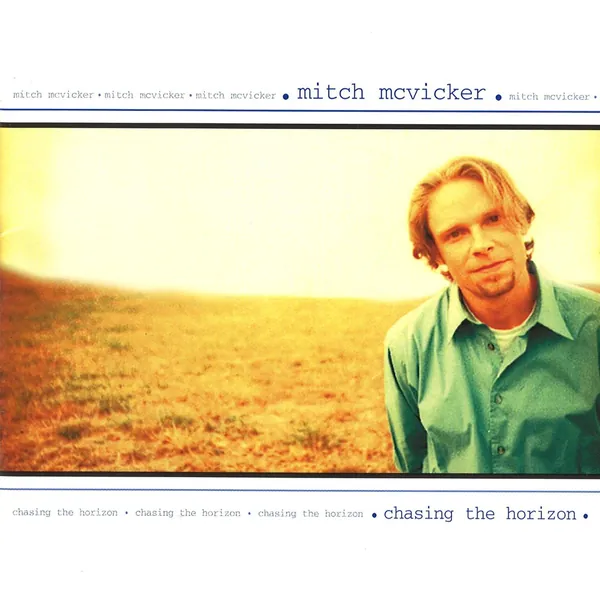
Within the first seconds of Mitch McVicker's sophomore release, Chasing the Horizon, it becomes obvious that this project contains a message McVicker feels many people need to hear. The first track, entitled "Emanuel," sets the theme of the record by stating:
You are right here with us,
I guess that's why You're called Emanuel.
You are right here with us,
When I look around, I can tell.
When I look around I can tell that
You're Emanuel.
Throughout the project, McVicker skillfully allows the listener to capture glimpses of his own spiritual journey. In doing so, the audience finds threads of their own spiritual expedition and is compelled to listen and gather morsels of hope for their lives.
In the song, "Upside Down," McVicker's weathered, Tom Petty-ish, warm vocals combined with softly played instruments, provide the perfect backdrop for a prayer. His true heart is revealed as McVicker quietly contemplates how his views and beliefs seem to be completely opposite that of the world's. He discusses how "inside out and upside down" things seem while quoting a portion of the beatitudes and realizing that the path he has chosen is better for him.
The first single release from the project, "When You Love" is McVicker's version of the Rich Mullins' song "When You Love" that he recorded on his second album. McVicker and Mullins had talked about rewriting and reworking the song. Approximately six months after the tragic wreck, McVicker went ahead and did it. A chorus and a bridge have been added, yet it continues to say that when we love, as God has taught us, miracles happen.
Jordan Richter does an interesting job of engineering and mixing the project and helping McVicker's talents stretch beyond what we expect. Perhaps this is most obvious in the song, "It Won't Take Long," when an old-sounding record is used in the background along with a whispering voice and several interesting instruments. Together, the sounds produce something very different for McVicker.
"Rich's Song" is the song that draws the most emotion from the listener, especially if they were fans of Rich Mullins. This song was one of healing for McVicker after the accident that took Mullins' life and almost cost McVicker his life. Knowing that causes the song to start listeners in tears. But, the track goes so much past that. It's a song of rejoicing for someone in Heaven. The gentle, non-bluegrass sounding, dulcimer playing in the background provides a flowing transition into a frame of mind for those who have gone on to Heaven before us.
Several songs on this project get help from artists such as: Dennis Holt, Phil Madeira, Mark Robertson, Rick Elias, and Brad Layher. It is well laid out, and put together. If you like the sounds of Rich Mullins, Tom Petty, The Wallflowers, or Andrew Peterson, Chasing the Horizon is a must have.
4.5 tocks
Other coverage for this album
The Phantom Tollbooth 2001Reviewed by Brian A. SmithMitch McVicker gets by with a little help from his friends on his sophomore release, Chasing the Horizon. The former traveling companion to Rich Mullins and A Ragamuffin Band enjoys the presence of Mark Robertson as producer and on bass, along with guitar work by Rick Elias and contributions on various instruments by the ubiquitous Phil Madeira. Fellow Kid Brother of St. Frank Michael Aukofer…The Phantom Tollbooth 2001Reviewed by Zik JacksonMitch McVicker, the hard-working singer/songwriter with the folksy, Midwest acoustic sound, releases Chasing the Horizon, a collection of songs born of life experiences. Teaming with talented musicians such as Phil Madeira on keys, Rick Elias on guitars, and Steve Hindalong on percussion, producer and bassist Mark Robertson helps McVicker craft a project tailored to fans of light, guitar-based…Similar sounding releases
 2001downheredownhere
 2005The Jeff Berry BandAll That's Left of Us
 2000Vigilantes of LoveAudible Sigh
 1999A Ragamuffin BandPrayers of a Ragamuffin
 1998SemisonicFeeling Strangely Fine
 2000Aaron SprinkleThe Kindest Days