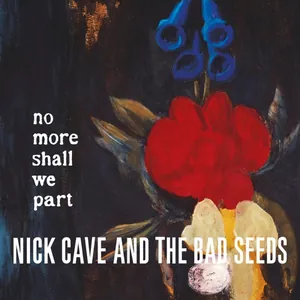
It's become almost a cliche for reviewers to say that each new Nick Cave release is his "greatest masterpiece yet". But from the outset, let me say that this new album is absolutely deserving of that accolade.
After topping his visceral 1994 album Let Love In with no less than three acclaimed albums of surpassing quality over the next eight years, this gothic-rock veteran of the music industry finally fumbled the ball with 2003's less than perfect Nocturama, which for its occasional thrilling urgency, was decidedly lacklustre, having been hastily written and recorded in just a week.
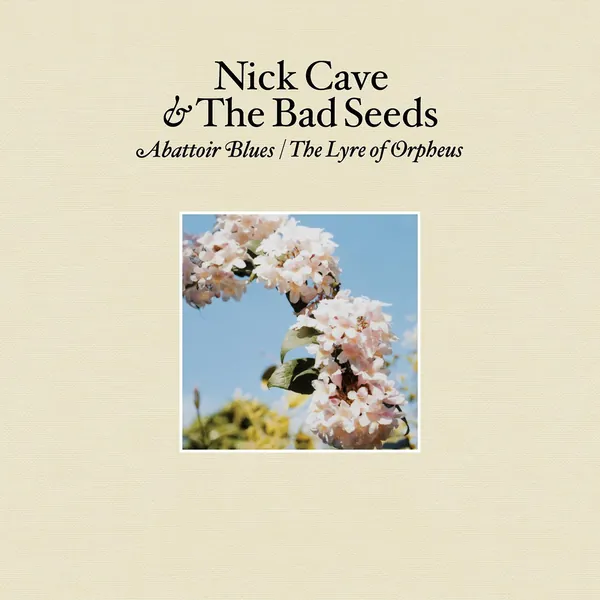
While fans and critics alike may forgive Cave for this blip on an otherwise impeccable record of quality music, he has more than made up for any shortcomings on this new sprawling double album. It goes to show how hard work and attention to detail produce the goods. The faux-antique cover belies the mother lode of darkly portentous gospel rock contained within. Like a barnstorming rock'n'roll revival crusade, Abattoir Blues and The Lyre of Orpheus form 82 minutes of absolute genius. And I make that statement without qualification.
It's also no secret that Cave's songs have grown increasingly spiritual with each album. Again, while Nocturama was a little deficient in this area, Abattoir and Lyre are heavily laden with divine inspiration. A suspicious belief in a "non-interventionist God" has been the brooding undercurrent throughout the Cave repertoire, in both the Birthday Party and Bad Seeds incarnations of his backing band, but here it has seemingly given way to confident statements of faith. The Gospel according to Nick Cave on this record is one of unashamed devotion and gritty worship.
The relentless driving piano-slamming rockabilly of "Get Ready for Love" leads off this seventeen track opus, with the London Community Gospel Choir in full swing behind the Psalm-like lyrics.
Get ready for love! Praise Him!
Get ready for love! Praise Him!
Well, most of all nothing much ever really happens
And God rides high up in the ordinary sky
Until we find ourselves at our most distracted
And the miracle that was promised creeps quietly by.
Praise Him till you've forgotten what you're praising Him for
Then praise Him a little bit more
I searched the seven seas and I've looked under the carpet
And browsed through the brochures that govern the skies
Then I was just hanging around, doing nothing and looked up to see
His face burned in the retina of your eyes
To my ears, there are no pangs of bitterness or jaded irony evident through any of this, as you might expect from someone who has released a spooky album called Murder Ballads. I think Cave is for real. He's certainly not preaching, but testifying powerfully of the God he senses in human connection. The strong melodies and bold rhythms only reinforce the conviction evident in the lyrics. Here's another shot of faith from the blistering stomp of track three "Hiding All Away", which also boasts the most dramatic closing of all the songs on the album.
Some of us we hide away, some of us we don't
Some will live to love another day, and some of us won't
But we all know there is a law, and that law it is love
And we all know there's a war coming, coming from above
There is a war coming! There is a war coming!
You will find superb melodies again on the ominous "Messiah Ward" with a haunting background vocal from the choir, and again on the next two rollicking love songs, "There She Goes, My Beautiful World" and "Nature Boy." The band mellows slightly for the title track, an ode to poverty mumbled over a meticulously straight but funky drum beat and minimal piano. However, it is "Let the Bells Ring" which stands out as one of the best tracks of the entire work, with a melody and guitar riff that sounds fascinatingly similar to some of the better tracks on U2's last album. Reportedly, this song is a tribute to the late Johnny Cash - in many ways a kindred spirit to Cave - but also has inclinations of a discussion with a more eternal someone in its deliberately ambiguous poetry.
C'mon kind Sir, let's walk outside and breathe the autumn air
See the many that have lived and died, see the unending golden stair
See all of us that have come behind, clutching at your hem
All the way from Arkansas, to your sweet and last amen
Let the bells ring. He is the real thing
Let the bells ring. He is the real, real thing
Take this deafening thunder down
Take this bread and take this wine
Your passing is not what we mourn, but the world you left behind.
Well, do not breathe, nor make a sound and behold your mighty work
That towers over the uncaring ground of a lesser, darker world.
There are those of us not fit to tie the laces of your shoes
Must remain to testify through an elementary blues
So let's walk outside, the hour is late
Through your crumbs and scattered shells
Where the awed and the mediocre wait, barely fit to ring the bells.
After a final strange song, "Fable of the Brown Ape" we reach the halfway mark. Switch the discs and The Lyre of Orpheus marks itself as essentially side B of this complete work, but stands distinctively on its own as the more subdued aspect.
The title track is another murder ballad, putting a particular Cavian twist on the mythological tale of Orpheus and Eurydice, with an infectious, spooky groove and refrain. "Breathless" follows, and is a gorgeous, happy love song with another implied nod to the Divine, declaring "We are all breathless without you." A similar, sweetly gentle love song with a silly little ending follows in "Babe You Turn Me On". Then, the final five songs unfold in a sequence so perfectly realised it surpasses all his past achievements. (How can someone be writing such beautiful fresh songs after so long in the business? You would think he'd have used such great ideas long ago.) Delicate strings complement the sad, sad melody of "Easy Money", before the surging folk rock of "Supernaturally" lifts the spirit of the music temporarily prior to the final fifteen minutes.
I used to think that Achtung Baby had one of the greatest closing song sequences, but now we have a challenger in "Spell," "Carry Me," and "O Children." A tender love song, a worshipful plea for spiritual solace, and an apocalyptic gospel ballad farewell, the album in a glorious triumvirate. Some lyrical highlights follow:
Who will lay down their hammer? Who will put up their sword?
And pause to see the mystery of the Word.
Carry me. Carry me. Carry me away.
("Carry Me")
O children, lift up your voice. Children, rejoice, rejoice!
Hey little train! We are all jumping on the train that goes to the Kingdom.
We're happy, Ma, we're having fun, and the train hasn't even left the station.
Hey little train! Wait for me! I once was blind but now I see.
Have you left a seat for me? Is that such a stretch of the imagination?
Hey little train! Wait for me! I was held in chains but now I'm free.
I'm hanging in there don't you see? In this process of elimination.
Hey little train! We are all jumping on the train that goes to the Kingdom.
We're happy, Ma, we're having fun It's beyond my wildest expectation.
("O Children")
I've already quoted the words on this album more generously than I probably should to avoid copyright infringement, but I'm finding it hard to contain myself. The album is that all round good! In fact, from first listen I knew I would be lauding it perhaps over enthusiastically, but this album merits it. Such a holistically perfect double album like this one doesn't come along all that often, so I'm splurging on the hyperbole!
For a broader exploration of the spirituality of Nick Cave's music, I can do no better than refer you to the "Saint Nick" chapter in Craig Detweiler and Barry Taylor's excellent book A Matrix of Meanings: Finding God in Pop Culture (Baker Academic, 2003). But you won't need that to convince you that Abattoir Blues and The Lyre of Orpheus are the new pinnacles of Nick Cave's career. Take a listen for yourself and plunge your soul into one of the greatest albums of the year.
5 tocks
Similar sounding releases
 2004Creamy VelourAngel's Guise
 1999WilcoSummerteeth
 2003The DecemberistsCastaways and Cutouts
 2005World Leader PretendPunches
 2000HomeXIV
 2003Bell X1Music in Mouth