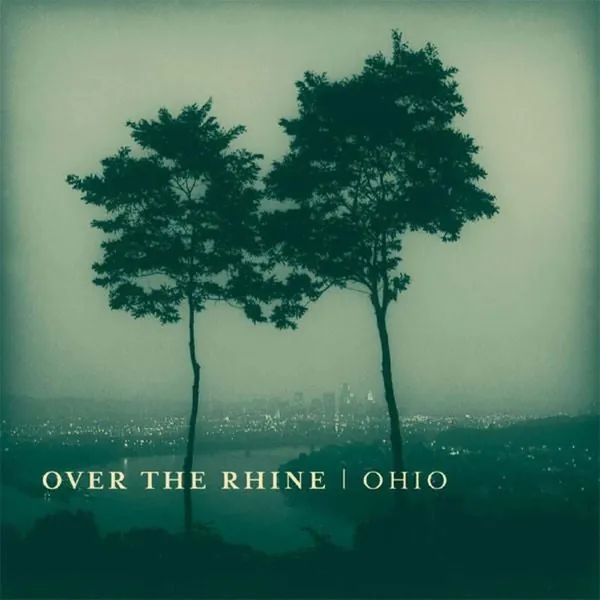
Over the Rhine Deliver Double Dose of Brilliance: Fans Worry that Their Favorite Musical Secret is About to Get Discovered
"I want to do better, I want to try harder," sings Karin Bergquist at the opening of Disc 2 in Over the Rhine's monstrous, beautiful, country-laced double-album Ohio. The next line in the same lyric gets at the essence of the album: "I want to believe... down to the letter."
Clearly, they are trying harder. And, yes, they're doing better, too. Turning the spotlight fully on Karin's performance as a stellar vocalist and an intense, intuitive interpreter of Linford Detweiler's poetic lyrics, Over the Rhine have burned what many will declare their brightest hour, and this reviewer would be hard-pressed to argue.
While somewhat different in character, the two records fuse into an impressive tome of short stories about faith fallen on hard times, relationships breaking up, and a nation losing its grip on its ideals and innocence. Call it a heart attack in the heartland--outcries for redemption, rejuvenation, and guidance.
Sonically, Ohio finds Linford and Karin adding colors to their palette, expanding on the folk-rock foundation of their strongest album--Good Dog, Bad Dog. There's a bit of the power-pop polish of Films for Radio, but primarily the duo and their everchanging body of supporting players dig deeper into the enchanting organic sound the fans have come to love. Producer/engineer Paul Mahern, a mixing-board veteran of recordings by Neil Young, Willie Nelson, Iggy Pop, and others, captures a bright and polished sound, even though there are no samples, loops, or special effects anywhere on the whole project. What makes the material sound so new and fresh is the surprising dose of country in the mix, and the new interest in storytelling rather than confessional catharsis. It's likely to provoke Emmylou Harris to revise her list of "Songs I Must Cover."
Of course, the question is: How did they convince their label, Virgin/Back Porch, to let them release a double-album when they remain, mysteriously, such a low-profile wonder?
Double albums happen for supergroups after the release of the Album that Made them Big. I suspect that the folks at Virgin, being in on the secret of the band's abilities, just couldn't resist the idea of two full discs of new material, even if only for their own indulgence. Who knows? Whatever the reason, it's good news for Rhine-landers. Most of the 21 new songs can stand with the best work the band has ever done.
Most of them. This listener prefers to think of Ohio as One Perfect Album and then a second disc that could be called Encores and Great New Ideas. Disc One flows beautifully, taking you to exhilarating heights, then down into the bluest blues and painful craters of heartbreak. Disc Two keeps one foot planted in the band's essential sound and style, but sets the other foot in unexpected territories. It feels to this listener that two tracks toe the line of "b-side" material. Fans will argue about "the song that could have been cut." But it is almost inappropriate to quibble about this in view of how generously the band has delivered this time around.
Here is a journey through Disc One, to scratch the surface of the project's riches, and then a few thoughts on Disc Two as well. (Wouldn't want to spoil too many surprises....)
And of course, these interpretations are all the opinion of just one listener. To quote some of the band's own lyrics:
I am truly skeptical of all that I have said...
DISC ONE
In "B.P.D.", a knockout opening number, Karin's chords provide persistent piano pulse. You start itching for the guitars, and they come, finally, but Karin's vocals are what carries the song into the stratosphere. It's a revelation, like you've never heard her before. "I'm waiting for the end," she sings, "Waiting to begin again." And you half-expect to hear some sort of explosive transformation right at the microphone as the song builds in intensity. (In concert, it does explode--don't miss the next OtR tour, because they take these songs to higher heights, carry them greater distances.) Karin seems to be singing a reproval to someone whose foolishness she cannot prevent, clean up, or help. But the more she sings, the more she seems to include herself in the reproval, until she concludes, "Only God can save us now."
The song burns with a kind of energy that gives you high expectations for the rest of the album. And those expectations are met over and over again.
"What I Remember Most" is a soulful number. It aches with a lover's suspicion that a relationship may all be coming to a close. The singer, while devastated by her own intuitions of disintegration, sounds confrontational, trying to bring on the inevitable catastrophe so at last she can know the truth and be set free from this period of uncertainty.
The saddest songs are the happiest
The hardest truths are the easiest
Put us both to the test
And tell me if you still need me
And I will swallow these words
And see if I can still believe
The brilliance of this album's lyrics lie in the way each song of relationship, with its particularity and storytelling, still leans toward addressing larger issues--the breakdown of innocent faith, the divorce of a nation and its ideals. Sometimes, the lyrics do more than lean that way. Karin sings:
This American dream may be poisonous
Violence is contagious
Crowded or empty
I walk these city streets alone.
Since the album's angst seems capable of capsizing it at this point, the band fortunately lets the sunshine in with "Show Me"--a clear choice for the first single. And while it is as shameless a pop number as they've ever recorded, the country styling and zippy guitar solo make it stick. And the lyrics are a country mile from your typical pop sentiments of infatuation. Karin sings about a time-tested love and the rewards of fidelity in the midst of the intimidating chaos. She lays out a simple appeal on a bed of la-las: "Can we make it last? Can we make it real? Come on and show me how it feels..."
Continuing in this vein of things we can affirm in our distress, "Jesus in New Orleans" is a tipsy little number of blissful blues, with enough of a sense of humor to juxtapose "Jesus" and "bloody Marys" in the same line. It's almost like Linford is showing off how good a lyricist he's become, spinning little webs of exquisite physical details that say so much about emotional truths. "She wore a dark and faded blazer / with a little of the lining hanging out..." Karin makes this character real, singing, "The road's been my redeemer." It is worth noting that, while this album finds the band reflecting with a heavy heart on the wounded state of this world, they are making even bolder assertions of responsibility and faith in the midst of it:
But when I least expect it
Here and there I see my savior's face
He's still my favorite loser
Falling for the entire human race
Ain't it crazy
What's revealed when you're not looking all that close
Ain't it crazy
How we put to death the ones we need the most...
"Ohio" is the album's most intimate moment, taking the album's spiritual themes to the specifics of a small-town breakdown. Karin sings alone at the piano, and this is where the album drops anchor. She's turning pages of memories like browsing through a photo album, broken by the story of collapse, and yet relieved to leave it all behind. (Karin grew up in Barnesville, a small town in the Ohio Valley, while Linford grew up not far away in Hartville and Fairpoint.) Perhaps it is the personal nature of these stories that makes this record clearly the pinnacle of Karin's career as a vocalist. She has never sounded better or more inspired. I'm convinced God invented vowels so Karin could sing them long, slow, and drawn out.
"Suitcase" is another heartbreaker, all the more sour for its sweet musicality and the almost casual nature of Karin's vocals.
Whatcha doin' with a suitcase
Tryin' to hit the ground with both feet runnin'
Aren't you trippin' on your shoelace
You're stealin' away on a sunny day
Well aren't you ashamed at all
Funny but I feel like I'm fallin'
The longtime concert favorite "Anything at All" finds its finest musical arrangement here. Tony Paoletta's visceral dobro notes curl around the edges of the verses. It also gives us another gospel-grounded affirmation: "Sooner or later, things will all come around for good / Sooner or later, I won't need anything..."
"Professional Daydreamer" gives new punch to the sentiment "Parting is such sweet sorrow." It's another song about the strong bonds of intimacy and the bloody agony of parting.
"Lifelong Fling" is as dreamy and sexy as anything they've recorded. It's a ramble that echoes their concert favorite "My Love is a Fever", in which Karin chews on the lyrics, stretching and twisting the words like they're made of salt water taffy. As she illustrates the joys of true love's journey, she makes it as enchanting as a children's picture book. Get a load of this:
The moon blind-sided the sky again
As we grabbed loose ends of the tide and then
The slippery slide
You know I can't say when
I ever took a ride that could slap me this silly
With roiling joy
Linford's keyboards mix with Paoletta's toe-curling pedal steel in an extended jam that only heightens the joy.
And then they lower the boom.
"Changes Come" is a difficult song for me to write about... perhaps I shouldn't. For this fan, it rivals "Latter Days" as the most exquisite, painful, and glorious thing they've recorded. At their Cornerstone concert, Karin said that they wrote this song after watching the news while tanks rolled through Baghdad and Bethlehem. You'll believe it. And during this soulful lament, performed entirely by the two of them, she confesses some intimate fears in frank, but fitting, words.
The finale soars as she slowly shifts the refrain: "Changes come, turn my world around" into an echo of Psalm 40: "Jesus come, bring the whole thing down..." If you don't need a period of silence after this song, you aren't paying enough attention.
DISC TWO
Disc 2 continues the storytelling cycle of lives cracked open, of raw and painful need for solace and healing.
"Long Lost Brother" is the song quoted at the beginning of this review. "I thought that we'd be further along by now," she sings, a sentiment that rings true as we watch the news of pre-emptive war. It's another profound and plaintive cry for a second chance in the ruins of this world we have wrecked.
"She" is an achingly sad story of domestic abuse, in which Karin struggles to focus on the woman's sad story and state of mind, but can't help injecting her own feelings that she should put a gun to her husband's head.
"Remind Us" returns Karin to the piano for a heavy-hearted anthem of wartime and mourning:
Can't bear the news in the evening
We're going to bed and we're going to war
All of this for
Anyone's guess
If we forget anything
Heaven forbid someone would remind us
Sinners and saints, priests and kings
Are we just using God for our own gain
What's in a name
Open your eyes...
Railing against complacency in times when action and clear thinking are crucial, "How Long Have You Been Stoned?" growls along a cantankerous rock and roll groove.
"Nobody Number One" rambles in the vein of "My Love is a Fever" in which she wrestles with the incurable problem of pain and hard questions: "You can't put no band-aid on this cancer / Like a twenty dollar bill for a topless dancer / You need questions, forget about the answers..."
"Cruel and Pretty" turns a Chagall painting into song, as dreamy as a sultry summer evening, celebrating the power of art to draw us up out of our sufferings into "the backstreets of heaven."
And yet, while the sincerity remains strong, the intensity of the early songs begins to slacken, slightening the album's overall impact. "When You Say Love" is a zippy little number, but a keyboard bit that I find annoyingly simplistic accompanies the redundant refrain.
"Fool" is a soulful performance in which Karin croons for a holy fool... probably THE Holy Fool... to continue seeking her in spite of her meandering nature: "Fool, pursue me from heaven above or to hell below / Just don't let go..."
"Hometown Boy" revisits their new country-flavored style with shimmering slide guitars, sharing more intuitions about the world "breaking down" and more sentiments about wanting to get out of town instead of slipping into complacency.
When the new version of the fan favorite "Bothered" finally arrives, it gives the record a much-needed return to the poetry and intensity of the first disc. The new slide guitar, punchy rhythms, and dreamy background harmonies are a nice new cast for the song. But it begs the question of why they felt it necessary to record it again. Perhaps they felt that the lyrics, which exhort us to put aside our fears and turn our attentions to faith, was a proper conclusion to a journey through sufferings, changes, and disintegration. I'm not complaining--it's beautiful.
Surely, though, the final track, "Idea #21 (Not Too Late)" stirs up enough intensity to bring closure, with its echoes of "How long?" It brings the car to a slow stop in the driveway of a church for a rousing bit of gospel. Who could ask for a better destination in view of all of these tales of sorrow and searching?
ALL IN ALL...
Ohio is evidence that Linford and Karin are in as prolific a period as any chapter of their career, undiscouraged by change-ups in the band makeup, ready to explore new expressions and sounds both old and new. Fans will certainly be pleased to have such a feast of fine work, but the question lingers--will Ohio's plenitude blunt its impact on newcomers? Would an abridged, more focused edition make for a stronger, more cohesive release?
Time will tell. Surely the band struggled with those questions. But when it comes down to it, you would be hard pressed to cut this back to a ten- or even a fifteen-song collection. We can be grateful that Over the Rhine are in peak condition at 10 albums old, and show no sign of slowing down. They remain one of contemporary music's deepest and strongest rivers, offering rest, refreshment, inspiration, and reflection... to those fortunate enough to find them.
Other coverage for this album
The Phantom Tollbooth 2003Reviewed by M. LearyLouis Armstrong once said, "The memory of things gone is important to a jazz musician. Things like old folks singing in the moonlight in the back yard on a hot night or something said long ago." In other words, good music should have the ability to reproduce experiences for us, to tell us old stories in new ways. If this is true, then Over the Rhine's latest endeavor is a decadent twenty-one-song…The Phantom Tollbooth 2003Reviewed by Steve StockmanSuperlatives are left impotent as I attempt to describe Over the Rhine's sixth album proper, tenth if we count various rare track compilations and a Christmas album. I found myself gasping throughout at the melodies, the poetry, the spiritual insight, and the reflections and echoes of my inner most grappling with how God interacts with this beautiful yet fatally tainted human race and we with…Similar sounding releases
 2001Jill PhillipsGod & Money
 2005Sara GrovesAdd to the Beauty
 2005Ginny OwensLive from New Orleans
 2005Rosie ThomasIf Songs Could Be Held
 2004Vienna TengWarm Strangers
 2004Nichole NordemanLive at the Door
More from Over the Rhine
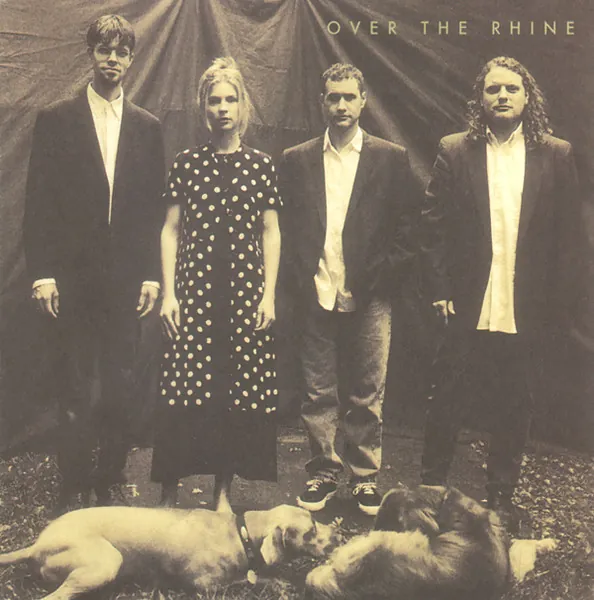 1996Good Dog Bad Dog: The Home Recordings
 1992Patience
 1996The Darkest Night of the Year
 2004Changes Come
 1999Amateur Shortwave Radio
 2002The Cutting Room Floor