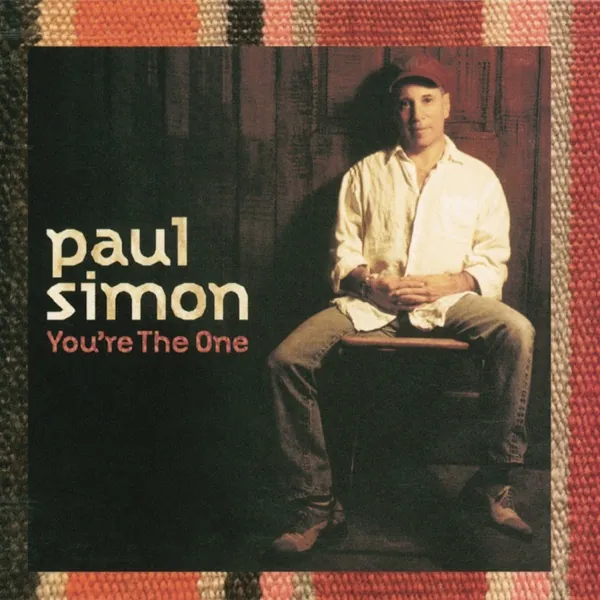
Paul Simon Finds Comfort In the Simple, Silent Things
Paul Simon hasn't had an album since 1990's The Rhythm of the Saints (unless you count that collection of songs from his failed Broadway musical. I don't.) It's been a long wait. Rhythm took the African influences that colored the pop hits of Graceland, and traveled off the path of radio-ready singles, crafting instead a soul-searching work about faith and hope in a world as doomed as the rain forests.
Perhaps that achievement was difficult to follow. Perhaps he became preoccupied with his marriage and his young children. Whatever happened, this new collection, You're the One, finds Simon feeling considerably older, in a contemplative and unhurried mood.
The songs seem at first to be simple, almost too easy, playful, and light. At first. But then the second, third, and fourth listens reveal layer upon layer of subtlety, sadness, and wisdom.
If the theme of Graceland was hope, and the theme of Rhythm was faith, the theme of this album is how all human effort and wisdom fails in the end, and all that really matters is... surprise... love, with its mysterious manner of grace and unpredictability.
You're the One is the album's most straightforward number, emphasizing that no story of heartbreak is as simple as it seems. "Nature gives us shapeless shapes/clouds and waves and flame/but human expectation/is that love remains the same..." In romantic love, we all fail each other, he says, and it's useless to play blaming games. He implies that we need humility and a tendency to forgive each other's shortfailings.
But there is another, sustaining, trustworthy love that permeates the world of these songs. On the song simply titled "Love," Simon asserts that as we scramble and strive to know love, "all the while it's free as air/like plants the medicine is everywhere." It seems that when human beings try to control the world and make things go their own way, love disappears and things go awry. But this ever present grace that surrounds us sounds like a higher love, something offered to us.
Simon avoids getting religious in his explanation of this higher love, except to acknowledge that there is wisdom in the teaching of Buddha, Mohammed, and yes, Jesus. Underneath all of these is something deeper. "The oldest silence speaks the loudest/under the deep green sea." Whatever packages have wrapped up love, to make it accessible to us, it always gets out of the box.
These sentiments sound like the musings of a guru, somebody who's climbed the steep mountain and is sitting contemplatively at the top. Simon's been climbing a long time and thus it's no surprise that age is one of the album's chief themes. In the most radio-friendly song, "Old," he playfully deflects stabs at his age by comparing himself to things much older, and at the same time by suggesting "the older the better." "The Bible is old," he laughs, "Greatest story ever told!"
In a curious parable called "The Teacher," a wise man lays down some laws in stone and wisely guides a struggling people to safety. He might be Jesus, or Buddha, or any famous teacher. All political or spiritual movements inevitably split into factions, and here, we are told, the teacher "divided in two." Things started to go wrong. Differing sects of followers, each carrying an incomplete truth, began to destroy the world. It seems that the original, simple journey of faith and love became an issue of control. And the world suffered. The lesson here might be that any well-intentioned, manmade system will in the end become a self-defeating mechanism, and we must learn the limits of reason, science, and politics. It is a beautiful, mysterious story that ends in a prayer: "Carry me home, my teacher. Carry me home." Is this a yearning for a better world, beyond this one? Or a request to go back to the beginning, before things went awry? Either way, human effort has failed again, and we need help from On High.
If age has taught Simon anything, it's that he was right a long long time ago when he wrote "The Sound of Silence." Silence is the center of this album. Perhaps that is why these songs are so gentle in their musicianship. Simon sings in his usual hushed tone, but it's more timid than ever before, as though if he sings with any more conviction he'll upset something fragile. He advises, "You want to be a writer? Find a quiet place, use a humble pen." In the chaos of life's hurricane, he finds peace in the quiet rituals of family life. "Over the bridge of time/I'm walking with my family/and the road begins to climb..."
It shouldn't surprise us that family is crucial in Simon's new songs. In the last decade, he must have spent a lot of time with his three children. It has definitely affected his style. This is the funniest, most playful album he's ever written. There are even a few interludes where he jumps into baby-talk syllabic vocal percussion (ma ma ma ma da da da da la la la la oom-bop-a-doom!) The song "Pigs, Sheep and Wolves" acts as a political satire, but it's also a great laugh-out-loud bedtime story.
Musically, You're the One is an album of brilliant, intricate percussion. It's a perfect match for Simon's delicate vocals. The drums bring energy and life to the songs, giving room for mellow reflection, resonant and even frightening prophecy, and delightful humor.
You can hear this seasoned songwriter settling back into his chair, finding new confidence, humor, even comfort, in this role as the father, the guide, the one who has been there. "Life has taught me," he seems to say, "That the simple things stand out as vital and enduring." In the resonant hum of the album's profound closing number, he tells us, "I'm heading for a time of quiet, when my restlessness is past." And somehow it sounds appealing.
4.5 tocks
Other coverage for this album
The Phantom Tollbooth 2000Reviewed by Steve StockmanYou're the One is to Paul Simon what Time Out of Mind was for Bob Dylan. Not that Simon has the roller coaster of genius and rubbish that Bob Dylan's recording history is prone to. For one thing Simon is not quite so prolific. It's nearly 15 years since Graceland perhaps Paul Simon's finest moment. And there have only been two albums of new songs since then and one of those was the commercially…Similar sounding releases
 1999Bruce CockburnBreakfast in New Orleans, Dinner in Timbuktu
 2005Blue MerleBurning In The Sun
 2002SpinozaThe Inevitable Movement Onward
 2001Ticklepenny CornerSunday's Best
 2002Mary's DenSongs from the Living Room
 2002Peter CaseBeeline