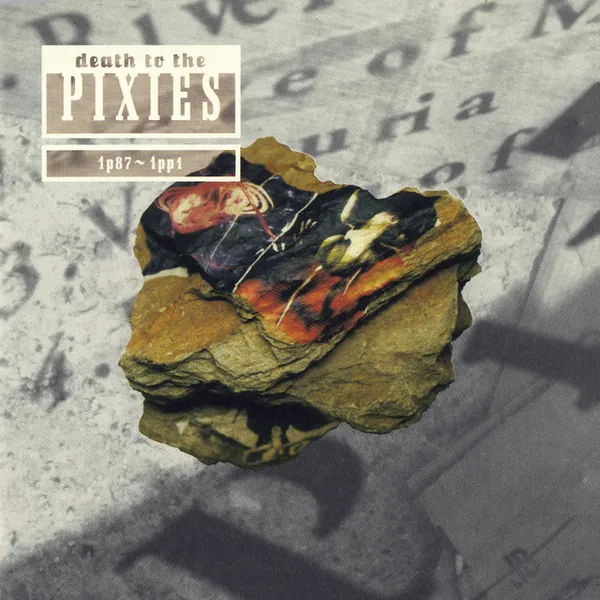
The Pixies are important. At least Kurt Cobain of Nirvana fame thought so. His song, "Smells Like Teen Spirit" was one of the most commercially-successful songs of this decade, and, by Cobain's admission, basically just an attempt at a Pixies' song. It was also an obvious homage to one of his favorite bands. Of course, Cobain is no longer with us. Neither are The Pixies--as the self-mocking title of their two-disc collection, Death to the Pixies, claims. They may be history, but their influence is still sending tremors along the modern rock landscape.
The Pixies embarked on their short-lived journey as musical pioneers back in the fall of 1987 with their six-song EP Come On Pilgrim, and followed it up in 1988 with Surfer Rosa and the Gigantic EP. None of these albums made much of a splash commercially, but they garnered all kinds of critical and college radio acclaim based on the strength of quirky songs like "Levitate Me" and "Where is My Mind?" By this time their signature brand of Ventures-style surf music and Ramones' punk energy had solidified into the trademark Pixies' sound, a sound at times coolly restrained on the verses and wildly whacked during the choruses. The whole manic-meets-melodic sound would foreshadow the entire grunge and emo movements to come later, making the Pixies a sort of granddaddy band to them all. Surely their most revered album, 1989's Doolittle, did much to lift them out of college radio lore into wider radio formats, largely thanks to more accessible hits like "Monkey Gone to Heaven," and "Here Comes Your Man." After achieving a bit of notoriety with their breakthrough album, they followed it up with an even more accessible, "poppier" set called Bossanova in 1990. Perhaps songs like "Dig for Fire" and "Velouria" were a bit too accessible. The band suffered a kind of U2-like backlash phenomenon among their die-hard fans who liked them for who they used to be rather than who they had become. During their tour opening for U2 and on 1991's Trompe le Monde, the Pixies made more of a return to their wilder glory days with their loudest album ever, featuring songs like "U-Mass" and "Planet of Sound." That was their last studio album, and it was six long years before this greatest hits compilation was released.
Death to the Pixies Disc One is an impressive collection of the songs that made them famous, including all the aforementioned as well as a host of others. The earlier, and perhaps most loved, period of the band is chronicled well with a total of three songs from Come on Pilgrim, two tracks from Surfer Rosa, and "Gigantic" from the 1988 EP of the same name. The collection leans most heavily on Doolittle; the bulk of songs are taken from it totaling a whopping six tracks in all. Bossanova offers three, and Trompe le Monde turns in a measly two tracks. The songs are served in a more or less random order rather than a chronological retelling of the Pixies story. Overall, it is a respectable and comprehensive look back on their most famous songs, although many fan favorites have been omitted. Among others, an obvious omission is their 1991 single, "Motorway to Roswell," which could have easily been included given the abbreviated length of this disc.
Thankfully, many of the songs you wish were on Disc One are given live treatments on Disc Two, such as concert favorites "Isla de Encanta," "Hangwire," "Vamos," the perennial "Tony's Theme" and "Allison" (one of my all-time favorites!). There is no information about where and when the live disc was recorded in the liner notes, but given the song selection it is a safe bet it was shortly before Bossanova. It appears that the live songs were taken from an entire concert rather than a collection of live cuts culled over time and myriad shows. Given this estimate, songs from Bossanova and Trompe le Monde are mostly and sadly absent. The material almost exclusively concentrates on their earliest albums. Of course, many of their Disc One hit songs are also delivered in live fashion, a total of eight repeats in all. They were a band as successful on stage as they were in the studio and the live songs are presented with all the frills and energy you would expect. Whenever it was, it must have been a great show.
Any fan of the band can tell you their lyrical content is not for the faint-hearted or easily offended. Often replete with profanity and candid references to various private anatomical parts, the Pixies were not ones to shy away from loaded words and phrases as their single, "U-Mass," most cogently expresses. In their irreverent ode to their alma mater, referring back to the days when they were known as just an up-and-coming Boston band, they heap enough explicit content in a single song to warrant one of those tidy warning labels. The offensive quotient is admittedly higher in some songs than others, but overall the band supplies very little in the way of positive encouragements or life-affirmations. In fact, most of their songs are esoteric for most listeners or just plain strange stories of aliens, animals and images of a man gone mad--grown up "to be a debaser" with "whores in his head." In many ways the Pixies were a perfect voice for postmodernism and Generation X angst. You might identify with the trials of love and war represented in their work, but outside of a party-full of songs celebrating the absurdity of modern life, you will be offered little hope for the future. Although they would probably be displeased or unmoved to hear it, in this way the Pixies represent a call to prayer for Christians. If their music, like their progeny Nirvana's, accurately characterizes a slice of campus life, the fruits of higher education, and the general cultural malaise of our young people, what does that say about us as a nation? What will it take to show an entire generation out of the maze of postmodern darkness into the alleviating light of the true gospel? The answer lies in our ability to love all of our neighbors no matter how much it hurts. And we will suffer, too, if we are to see the heart-aching masses, represented by bands like the Pixies, healed from past hurts and present confusion.
After their break-up, lead-vocalist and guitar player Black Francis recreated himself as Frank Black and is still releasing bizarre albums to this day. Joey Santiago, the lead guitar player, turns up here and there. The drummer, David Lovering, and bass player, Kim Deal, teamed up later as The Breeders for another fifteen minutes of fame. To date none of them have achieved the level of passion or creativity individually that they knew collectively as the Pixies, reminding us that all things come to an end. The fruits of their collaboration, however, are concisely collected here in two discs of both historic significance and bittersweet party songs. Artists this unique and creative should be acknowledging their talents as inherently God-given, because they are. Although a reunion and Pixies Praise God Tour seems unlikely on the immediate horizon, we can always hope for a better world where such things come true.
4 tocks
Similar sounding releases
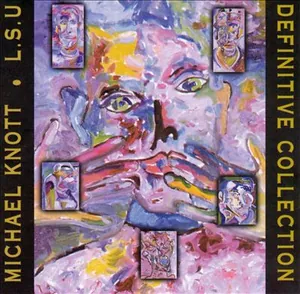 1999Michael Knott / L.S. UndergroundDefinitive Collection
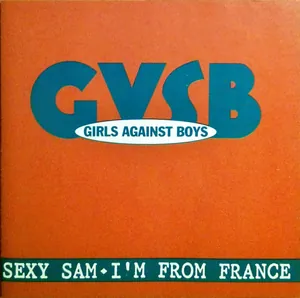 1994Girls Against BoysSexy Sam/I'm From France
 1993The ChoirKissers and Killers
 1996Soul-Junk1953
 1991Chagall GuevaraChagall Guevara
 1994Sunday BlueBreathe