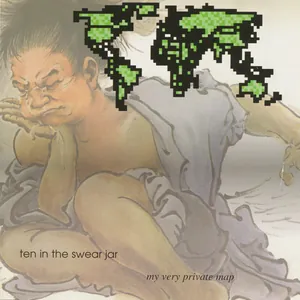
I think the guitar-bass-drum axis is at a low swing to the millennium pitch. New territory is being defined, and the players who wish to play out the same old scene just can't keep up. That is, the highways and bi-ways of modern rock are so well-worn by the jackboots of conformacy and expectation, it's obvious that new exit ramps must be designed.
Some elements of the renovation seem more popularly cherished than others -- and some seem more cherished by the subcultures that presume to be crafting the vocabulary for the next round of cultural-aesthetic intercourse. As Chuck Eddy makes clear in his prolonged examination of pop music as mutated form, The Accidental Evolution of Rock & Roll, mutation is not merely essential to the creation of genuinely enjoyable popular musics -- it is the life form itself. Rock, with its roots in gospel's energy forged in American manifest destiny, only survives by infecting the tribes it encounters on its attempt to prove the world round. And that's why it turns us on.
Ten in the Swear Jar I think would be listed in Eddy's chapter titled "Everything Rock VS. Collage Rock," although it is written (if not wholly performed, perhaps) out of a more current styling than any of the other examples he gave in that '97-published book. It is quietly shocking, filled with small treasures of sound and a subtle originality that few rock bands these days are capable of -- regardless of instrumentation or genre bending.
I saw Ten in the Swear Jar live at Seattle's Club Paradox a couple months back, and was struck by the instruments the otherwise common-alternative-looking four-piece played these songs on: accordion, harmonium, cheap weird synths, mandolins, sax, banjo, "tiny guitar," etc. The inventive instrumentation reminding me of the Cali klezmer madness of the late great Giant Aunt Farm (one of my favorite bands), but the songwriting striking me, for all of its atmospheric amorphous instrumental excesses, more of the post-90s sounding indie rock bands, a la American Music Club, Starflyer 59, Morphine, etc. It had that occasionally profane often ambiguous sometimes sharp-witted lyrics, soft-loud verse-chorus, sense of mope-drama down pat, but around it (by choice of instruments and artful but melodic playing) formed a swirl of the kind of child's toys' giddy chaos fetchingly erected by such pop oddities as OMD and Yellow Magic Orchestra in the late 70s/early 80s. Buying the album confirmed the band's desire to craft a new form, less reliant on expectations than the flow of sound and its aesthetic sense of play. I missed the live performance's occasional throat-grabbing drive, but was glad the rockist element was shirked so boldly for the crafty sonic noodling on the disc.
As punk rock was still punk when played on synths or garbage cans or acoustic guitars, this stuff sounds to me like it is actually cool, poetic, less formalized indie rock played on eclectic instruments, with a strong nod to pre-New Wave experimenters like Eno and Fripp and the scenes they inspired (Polyrock, Legendary Pink Dots, etc.) . But like the third disc in the Clash's "Sandinista" set, this is a lot of dubby fooling around with a base in Western pop music form. These are songs, no matter how deconstructed. Like the way a more ordinary (that is, more linear-traditional) David Lynch movie has some jarring scenes of dark surrealism, jagged thoughts and creepy passages pop up through this delicate art-pop miasma. And yet the less progressive set should be intrigued by the breathy, deep, often coherent vocal melodies.
It is a very private map, but one not utterly unrecognizable, and certainly not forged out of any real anti-social tendencies...just smaller, prettier, and less banal than what is available floating in the middle.