For hardcore fans of any artist, a new album is not so much a new release, it's an event. It's one usually accompanied by activity that comes out of expectation and out of a desire to fulfill a ritual: the wait outside for the store to open, or the longer wait at a pre-arranged signing session, and then the wait for the first chart placing as the new material, unfamiliar at first, starts to sink in and bed down in your consciousness. I remember such experiences as a thirteen year-old fan of British band The Jam, as each new single was anticipated so keenly, I probably presumed that the rest of the record-buying public would only feel the same as I did.
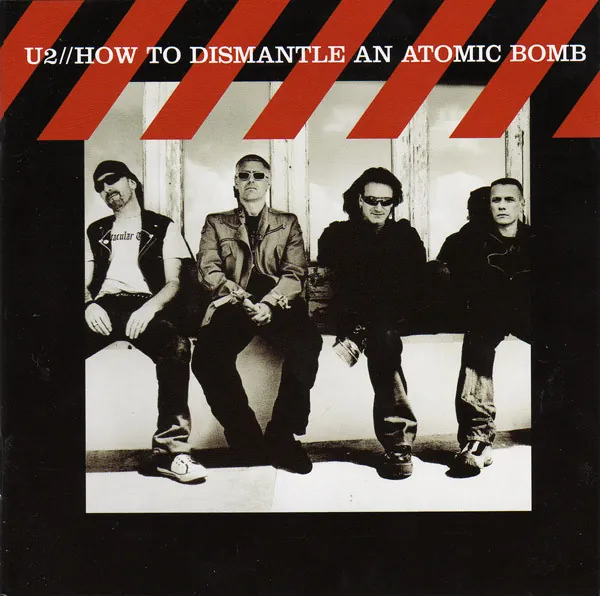
You'd be forgiven for thinking that they do, over this particular release, judging by the hype that's proceeded it - leaving aside the Apple TV adverts and the iPod deals, the interest garnered by the starring role of a most unusual world-statesman led to a large amount of belated goodwill for a band with longevity and consistently-high musical standards which are no longer in question. So, when asking is-it-any-good, it's nice to know that it justifies all the fuss. Indeed, so awesome is HTDAAB that, at times, as one reviewer already put it, "...it leaves the listener gasping for less."
U2 talked initially, of making a real 'rock 'n' roll record', and afterwards remarked that "This Is the One." It may well join The Joshua Tree and Achtung Baby as the trio of essential U2 albums. But get this: rumours of it being 'the sound of the original group' have been highly exaggerated. There's strains of all the previous albums, but it's closest in sonic terrain to their last outing, All That You Can't Leave Behind.
The opener, and single "Vertigo" you should already know, and with "Miracle Drug" - a likely live crowd-pleaser, next year--quickly following, the emotive "Sometimes You Can't Make It On Your Own" has U2, by now, reaching for transcendent heights. The atomic bomb that exploded in Bono's life was the death of his father Bob, in 2001, and this and other places on the record are a naked account of his struggle to come to terms with his bereavement.
A strong start and the emotional intensity changes after that. They get deep down and dirty and "Love and Peace or Else" is reminiscent of BRMC's "Spread Your Love." That particular 'Frisco combo's lyrical concerns were often religious in language, although coming from a dark place. U2's are specifically full of light. "City of Blinding Lights" continues those themes and harks back to some of those on 1997's Pop. It's one of several cuts that sound even better at night - travelling late in a car, or looking across moon-lit water...it's one that highlights that the band are still receptive to new musical influences, with the slightest hint of Keane, Doves and even David Gray, here and there.
Arguably, the heaviest mother on the record is the Jane's Addiction-esque "Crumbs From Your Table," inspired by Bono's dealings with right-wing Christian fundamentalism whilst pleading the cause of the Third World and flagging-up the AIDS pandemic. Sadly, the Bride of Christ never seemed so glamorously vacuous.
For the most politicized group in history now, this is still a warmly spiritual album. Their Christianity is more to the fore than their
placarding. The politics are oblique, as shown on "A Man and a Woman," the band's first foray into reggae. What a bummer this song could've been. U2 stray dangerously close to Enrique Iglesias territory but the slightly-swampy feel keeps to Bob Marley and Moloko, thankfully.
At the height of their career, The Jam's singer songwriter Paul Weller wanted to make the best album of all time, suffering a nervous breakdown in the process. The resulting work was to be their last. U2 wanted this album to be their Who's Next - it's certainly a case of where next, for the world's biggest band. Because, despite the awesomeness of HTDAAB there's still the feeling that they could step up a gear, if they had to.
How high can they go?
4 tocks
Other coverage for this album
The Phantom Tollbooth 2005Reviewed by Nick MattiskeIn the film Rattle and Hum Larry Mullen Jr famously described that undertaking as a "musical journey." How To Dismantle An Atomic Bomb likewise is a musical journey, albeit through U2's back catalogue. Like All That You Can't Leave Behind, they throw a few grimy rock numbers amongst a bunch of archetypal, soaring, ringing anthems, with the occasional deviation into more grown-up musical styles.…The Phantom Tollbooth 2004Reviewed by Steve StockmanOn "City of Blinding Lights" from this U2's eleventh studio album Bono sings, "Time, time/Won't leave me as I am/But time won't take the boy out of this man." This album should have been called Man and they should have got the face of Peter Rowan whose innocent face appeared on the original Boy. Twenty five years on, he could have graced the cover with the facial lines of time and a declaration…Similar sounding releases
 2005GoldrushOzona
 1998SemisonicFeeling Strangely Fine
 2003Rock 'n' Roll Worship CircusA Beautiful Glow
 2003Nada SurfLet Go
 1996The ThroesAmeroafriasiana
 2002Midnight OilCapricornia
More from U2
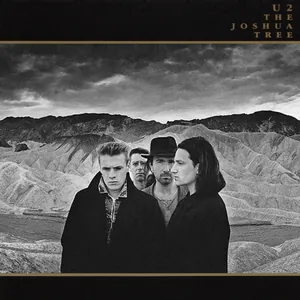 1987The Joshua Tree
 2003U2 Go Home: Live from Slane Castle, Ireland (Video)
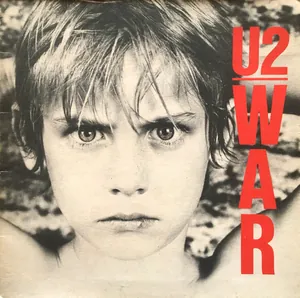 1983War
 2001Elevation: Live from Boston (Video)
 2000All That You Can't Leave Behind
 2005Vertigo 2005: Live from Chicago (Video)