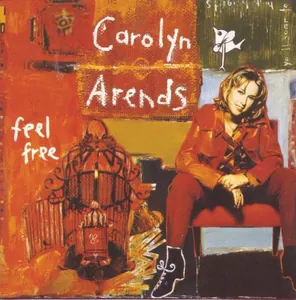
To many people today, "folk" music simply means old songs played on acoustic instruments. In actuality, folk is the form of music which artists have traditionally used to talk about their lives and the lives of people around them. Thank goodness for artists like Carolyn Arends, who understands the value of that approach and pursues it with vigor.
Much like contemporary Christian music, the folk genre is defined and characterized by content. Throughout her sophomore release, Feel Free, Arends' writing is poignant and funny, simple, though profound. She balances her inclination for introspection with humor-as these lines from "New Year's Day" evidence:
I buy a lot of diaries Fill them full of good intentions Each and every New Year's Eve I make myself a list Of all the things I'm gonna change Until January 2nd
With songs like "There You Are" (on which she marvels at the often overlooked closeness of God) and "Good Thing Going" (where she speaks of the effort and love required to maintain a healthy marriage), Arends continues in the decidedly personal vein that earmarked her debut effort. Of course, Arends the singer has a great ally in Arends the songwriter-she has a knack for penning lyrics which offer unique perspectives on common themes and matches them with unusual, yet catchy, melodies. Indeed, Feel Free is sure to cement Arends' reputation as a talented writer and gifted storyteller.
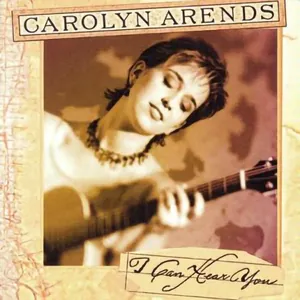
The uncomplicated acoustic guitar arrangements and pop sensibilities of I Can Hear You have been replaced by a full-throttle, electric force and a retro-infused rock feel on Feel Free. With this choice Arends demonstrates a remarkable willingness to bypass the tried and true (formulaic) course for a bolder, but risky, path. From the opening cut, "Do What You Do," to tracks like "This I Know" and "Last Thursday," she makes an assertive, guitar-chop driven statement. The musicians (multi-instrumentalist Spencer Capier, drummer Paul Papworth, and bassist Dave Olson) who accompanied Arends on tour this past year, form the base for this buff, new sound, while some of Nashville's finest sessions players (including Gordon Kennedy, Phil Madeira, and John Mark Painter, from the duo Fleming & John) add definition and flourish. Unquestionably, Feel Free's studio backing is precise, yet it boasts the appealing looseness and adventurous spirit of a tight-knit band.
Unfortunately, Arends' shift toward aggressive folk and vintage rock is at times problematic-the muscle of the music overshadows the power of her lyrics. Similar to Phil Keaggy's technique (textured and Beatle-esque), much of Feel Free whips up a mile-high wall of sound which tends to block out the warmth and expressiveness of Arends' vocals. The quality and range of her voice is better suited to a less layered and bombastic approach. For example, "Do We Dare," which is arguably the best cut on the album, captivates the listener by backing uncommon insight on the transcendent nature of God with simple organ and guitar accompaniment and crisp, clear vocals. There are too few moments like that where Arends' gift as a communicator comes through.
Without a doubt, Carolyn Arends is one of the sharpest blades on Christian music's cutting edge. While I commend Arends' eagerness to experiment and explore various musical styles, I feel that the results this time around compromise her strengths. Rather than setting a suitable stage for her pleasant but modest voice and peerless poetry, she has cranked up the volume to the point of obscuring just about everything else. However, with the considerable creative vision and raw talent that Carolyn Arends possesses, I am sure it won't take her long to find a more fitting avenue of "freedom."
Other coverage for this album
The Lighthouse June 1997Reviewed by Brendt W. WatersIt seems very appropriate that Carolyn Arends opened for Steven Curtis Chapman on his recently-completed Signs Of Life Tour. Chapman went out on a limb and underwent a musical re-invention many years into a successful career with a firmly established sound. Perched on another limb of the musical risk tree, we find Arends, undergoing a change early in her career. After a well-received debut in the…Similar sounding releases
 1998WilshireWilshire
 2000Matt RedmanThe Father's Song
 2005Thea GilmoreSongs From the Gutter
 1999BooleyBathroom Floor
 2002Vineyard MusicBeautiful
 2001Shaun GrovesInvitation to Eavesdrop