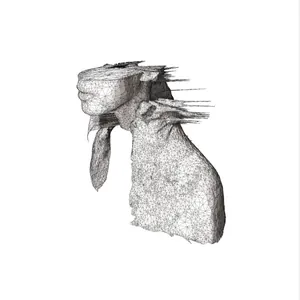
Some bands wear their influences on their sleeve.
The members of Coldplay wear their influences on their heads. U2, Oasis, Jeff Buckley, Radiohead, and the Beatles all collide in this band's crystalline, sun-shiny, polished sound.
This, their crucial sophomore effort, takes the acoustic pop-rock of Parachutes and morphs it into Coldplay 2.0... an electric-guitar/keyboard version that doubles the contagious hooks and serves up one irresistible melody after another.
Lead singer Chris Martin shows he has the stuff to pursue great vocalists like Buckley and Bono, crooning and sometimes soaring into falsetto harmonies that could provoke Bono to sue for plagiarism.
Even more interesting... more frustratingly familiar... are Martin's lyrics. They walk that ambiguous line between the stuff of love songs and the stuff of spiritual soul searching. God is mentioned several times, and several of the seeming-love songs stray from earthly sentiments to meditations on mortality, judgment, and grace. Martin's a young lyricist, walking in the footsteps of great songwriters, dealing with profound themes, and here's hoping he develops a more distinctive, personal voice.
All of this is good. And the musical highs on this album are very high indeed, making it the most impressive Brit-rock album I've heard since Radiohead's OK Computer. It's also the most aggressive rock-record dialogue with the Deity since All That You Can't Leave Behind.
But with maturity and courage, the band could achieve so much more. What irritates me about this album is its refusal to take risks. Coldplay have their sound nailed down to perfection... too perfectly. Every beat gets hit, every note is precise. It's more "pop" than "rock", more controlled than it should be. You're more inclined to say, "Wow, they've really practiced!" than "Whoah... where did that come from?!" After hearing it for the first time, my friend Nathan, a fan of Coldplay, remarked: "I could sense the record company standing in the studio." I agree. Every song sounds arranged to be a hit single.
Perhaps I am pushing the band to grow up too quickly... perhaps they need this foundation of perfectly executed pop before they can launch into more thrilling explorations. Time will tell if they can push themselves to grow in new directions. I imagine these songs will be transformed on the stage as the musicians discover new things they can do.
Perhaps they will also discover some new sounds. The music here is so relentlessly bright and glossy that it feels like eating too much sugar in one sitting. More alteration in sound, more exploration of different textures and colors, would have made the journey more interesting and the bright spots even brighter. They seem so excited to have discovered a way to hit emotional high points like Radiohead or R.E.M. do three or four times on an album, that they rush to those points right away in every song. There is not enough restraint, not enough climbing. In the language of rock, if you will, it's like going straight to the sex without any courtship or kissing.
Still, no album this year has given us so many singable songs. On the radio, any one of these tracks will stand out, bright and bold, offset by the variety that has come before. (Thus, I prefer hearing Coldplay on the radio, in small doses.)
Overall, A Rush of Blood to the Head leaves me with one burning question: "What will they sound like in five years?"
Journey Through the Songs On A Rush of Blood To The Head
"Politik" is the kind of grand opening song U2 are famous for, laying down the thematic tracks for the album. It opens with a hammering of guitar-rock exclamation points, then delivers a similarly hammering series of lyrics:
Look at earth from outer space
Everyone must find their place...
Give me time and give me space
Give me real don't give me fake
Give me strength, reserve, control
Give me heart and give me soul
Give me time give us a kiss
Tell me your politik
And open up your eyes
"Everyone must find their place..." That seems to be the theme of the album. Several songs are about folks who are lost and trying to find their way through life, trying to make sense of the chaos.
This is clearly the point of "In My Place," the first single, an infuriatingly simple and maddeningly contagious song.
I was lost, I was lost
Crossed lines I shouldn't have crossed
Yeah, how long must you wait for me?
Already we have had two songs of dialogue with God. There is a humble admission of failure, yet with a reassuring sense of eventual forgiveness and grace.
Musically, "God Put a Smile on my Face" lifts us out of the angst and sets us on a firm foundation. In spite of life's questions, the singer affirms his faith in eventual deliverance. He finds signs of benevolence.
Where do we go? Nobody knows
Don't ever say you're on your way down when
God gave you style and gave you grace
And put a smile upon your face...
Further, he argues that we the listeners are all messed up, as he is, and that our petty differences may not matter as much as they seem to.
Now when you work it out I'm worse than you
When you work it out, I want it too
When you work out where to draw the line
Your guess is as good as mine...
These lyrics are spacious and simple, yet they leave me grappling for an interpretation. Is this actually an exploration of our need for grace because we are all falling short of God's glory? "When you work it out I'm worse than you..." That sounds like the Apostle Paul writing that he is the worst of sinners, even though he is up at the pulpit. Is it an admittance of guilt, of being lost, and yet an affirmation of the seemingly contradictory hope in salvation?
All in all, this ambitious power-pop builds to become one of the band's two strongest songs.
"The Scientist" is a vulnerable personal testimony, a prayer or a plea. It could be a lovers' breakup song. Or it could be sentiments from the Last Supper or Gethsemane. After all, lines like "I set you apart" are not typical parlance of romance, but of Scripture. Here are a few lines:
I had to find you
Tell you I need you
Tell you I set you apart...
Let's go back to the start...
Nobody said it was easy
It's such a shame for us to part
Nobody said it was easy
No one ever said it would be this hard
Oh take me back to the start
I was just guessing numbers and figures
Pulling the puzzles apart
Questions of science, science and progress
Do not speak as loud as my heart...
Tell me you love me, come back and haunt me
Oh, and I rush to the start...
The refrain, "I'm going back to the start" could indicate the desire for forgiveness, a clean slate, starting again. The affirmation of what the heart knows over what the head knows.
The song culminates in as clear a signpost to U2 as anything on the album, guitars crunching along the same lines as "All I Want is You" and Chris Martin crooning in falsetto with Bono-fide passion.
Then, the album reaches its peak with "Clocks," a glorious whirling dervish of keyboards and guitar that recalls a Moby instrumental, with Martin's falsetto soaring in harmony... "You are... You are..." Is that an answer to "I AM"?
"Daylight" crams a George Harrison riff together with a chorus that is more Bee Gees than Beatles, building to an optimistic refrain "Slowly breaking through--a daylight."
"Green Eyes" is the song that will become a lasting pop hit sung from one lover to the next, a declaration of infatuation that's as sweet as it is unsurprising. Sounds like they could have stolen this one from some unreleased Oasis record. But listen to the religious quality of the metaphors:
Honey you are a rock on which I stand
And I come here to talk
I hope you understand
Green eyes, yeah the spotlight shines upon you
How could anybody deny you?
I came here with a load
Now I feel so much lighter now that I've met you
Honey you should know that I could never go on without you
Green eyes
Honey you are the sea upon which I float
And I came here to talk
I think you should know
Green eyes, you're the one that I wanted to find
Anyone who tried to deny you
Must be out of their mind....
With "Warning Sign" the album loses its footing. Instead of taking us somewhere new, it returns to another glossy, redundant melody and lesser lyrics like "I crawl back into your open arms..."
Just in time "A Whisper" takes the band down a darkened tangent, a rough grinding guitar riff, hushed chanting lyrics that offset lines that chime and roar. The lyrics suggest time running out and, again, the need for grace in the darkness.
I hear the sound of the ticking of clocks
Come back and look for me when I am lost
And what is the "whisper" that runs through the song? Is it a reference to the still small voice... the conscience... the spirit coming to the rescue?
In the darkest hour of the album, "A Rush of Blood to the Head" brings a man to the point of destroying the machine he has built, the "house" where supposedly a great deal of trouble has begun. Despair looms on the horizon, and I hear echoes of Radiohead's "Airbag": "Pull me out of the aircrash...." Taken by itself, this would be a frightening song:
I'm going to buy this place and burn it down
Stand here beside me baby in the crumbling walls...
I'm going to buy this place and see it burn
And do back the things I did to you in return...
I'm gonna buy a gun and start a war
If you can tell me something worth fighting for
I'm gonna buy this place, is what I said
Blame it upon a rush of blood to the head
Again, the "head" is the problem... the acts of destruction and desperation come from the mind, not the heart. Something suicidal sounds imminent.
Sure enough, the closing song puts it all in context.
"Amsterdam" portrays the suicidal man humbled, broken, and rescued by someone who "cut me loose." And the album closes with a quiet, comforting consolation:
Time, it's on your side...it's no cause for concern
The comfort and inspiration of Coldplay's focus on salvation makes them a vital band in the current music scene. They have what is missing from Radiohead's ultimately unsatisfying journeys through the abyss. They use their powers not to shove our face into the darkness, venting their rage or angst, but to shove us through the darkness to light.
Unfortunately, they are so anxious to turn on the light that it's a little blinding. Their affirmations would be so much more resonant, with more convincing testimonies, if their music felt a little more "lived in," a little more human. Radiohead's ragged textures give us the sense they have traveled a long road and know much about life's hardships. Thus, their occasional bright spots are oh so bright and assuring. If bands could merge like corporations, I'd like to see Coldplay and Radiohead try a joint effort just to see the highs get higher and the lows get lower. One can powerfully portray the mysterious, the chaotic, and the troubling, while the other has a firm handle on how to cope with such darkness. One intrigues, the other inspires.
Other coverage for this album
The Rebel Base 2002Reviewed by David MartinAuthor's Note: This review might not be as in depth as some of my usual ones - I was excited about the new Coldplay album, and it's been a while since I've been able to tell you about an album before its release date. These are just my initial impressions of what promises to be one of the best releases of the year 2002, and I will likely update after I have the album in my hands and I've had more…The Phantom Tollbooth 2002Reviewed by Vik BansalThese days, when a British band shifts seven-figure quantities of albums in the US, it is such a rare event that it warrants further analysis. A few years ago, with Sixteen Stone and Razorblade Suitcase, Bush proved that the Brits could rock like its Seattle counterparts. Meanwhile, with What's The Story... and Be Here Now, Oasis demonstrated the sad fact that millions of people are susceptible…The Phantom Tollbooth 2002Reviewed by Brendan BoughenGod gave me style and gave me grace, God put a smile upon my face. In the universe of contemporary music where success still seems to go hand-in-hand with excess - lyrically and musically speaking - Coldplay shouldn't be racking up album sales in the millions, as they did for their debut Parachutes. These days it often seems the only time a band wears their heart on the sleeve in a rock song is…Opus 2002Reviewed by Paul NewboldColdplay have always been the good guys, the honest, respectable, and reliable band. They seem to fluently churn out feel-good anthems from nowhere. Their sound is unmistakable, a warm acoustic guitar with Chris Martin's amenable lyrics. However, A Rush of Blood to the Head hints at a darker side, which may have been overlooked through the "good as gold" smiles and glossy charm of their debut…Similar sounding releases
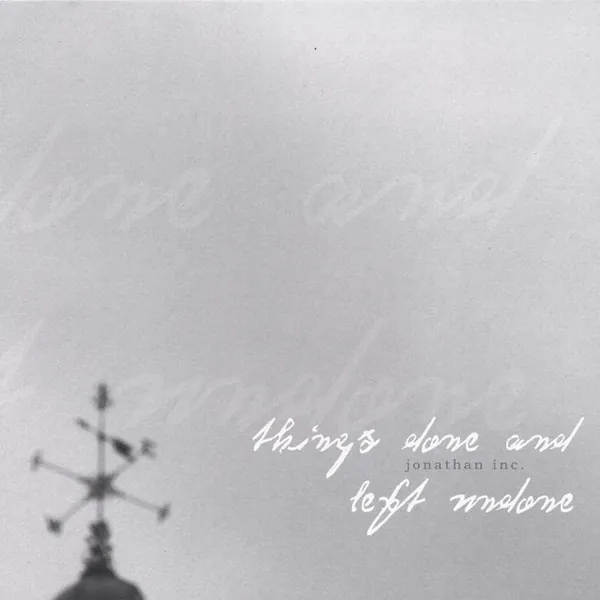 2004Jonathan Inc.Things Done and Left Undone
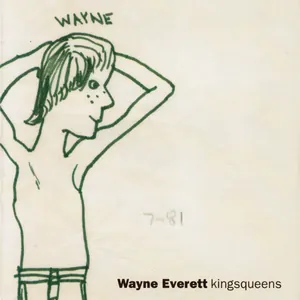 2003Wayne EverettKingsQueens
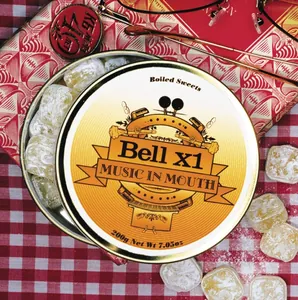 2003Bell X1Music in Mouth
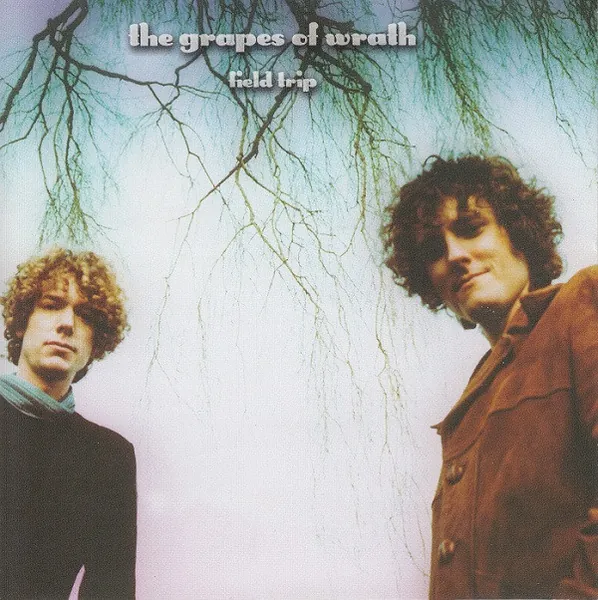 2000The Grapes of WrathField Trip
 2002Matt RedmanWhere Angels Fear To Tread
 2004Iain ArcherFlood the Tanks