It's hard to believe that, after five solid albums, unparalleled critical acclaim, and a foray into action movies, Sam Phillips is still far from becoming a household word. But maybe she likes it that way. Judging from the guarded tones of "Disappearing Act," one of two new songs that appears on her "near and not-so-near hits" collection Zero Zero Zero, the spotlight-shy singer/songwriter may not enjoy it when fame brings inquiring minds too close to home.
It's getting crowded in here
It's getting rather personal...
You've activated my migrated interest in the disappearing act.
Of course, as is the case with many of Phillips's artfully riddlesome songs, this could mean a great many things. Her career has been marked with disappearances.
Most notably, after achieving the status of Contemporary Christian Music Pop Queen, the artist formerly known as Leslie Phillips dropped off the face of the earth. With an impassioned farewell that graced the cover of CCM Magazine, Phillips turned her back on the industry and the process of making music that she now saw was merely "propaganda" for Jesus. Working with producer T-Bone Burnett, the mixing board master often credited with leading Bob Dylan to Christianity, she crafted her farewell album, a counter-culture collection of confessionals, gripes, and prayers called The Turning, which now holds a somewhat legendary status as one of the few "Christian" releases with real soul-searching integrity.
Her relationship with T-Bone Burnett led to marriage... literally... as well as a marriage of styles and visions that would slowly become manifest as the recordings of "Sam" (her childhood nickname) Phillips--a new name for a new start. Their collaboration has gone on to influence the work of many bigger-name musicians including Elvis Costello, Jimmie Dale Gilmore, Bruce Cockburn, and The Wallflowers. Tired of the manipulative industry of gospel rock which demanded that she act as though everything was "black and white in a grey world"--in essence, tired of being a hypocrite--she began searching for her true voice and a form of honest, open, unbound, literate expression. New lyrics reflected her immersion in the writings of Thomas Merton, G.K. Chesterton, Pablo Neruda, and Walker Percy. Ironically, she had to leave the conventional Christian music industry to write her own psalms. Burnett called Phillips's progression "a spiritual metamorphosis."
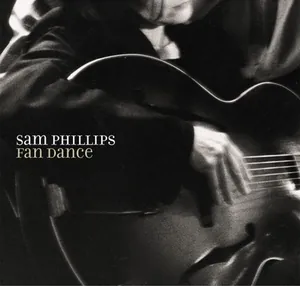
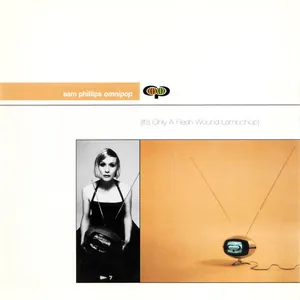
The four albums that followed (The Indescribable Wow, Cruel Inventions, Martinis and Bikinis, and Omnipop (It's Only a Flesh Wound, Lambchop)) have been universally celebrated by critics and audiophiles everywhere. Entertainment Weekly still calls her the female Elvis Costello. But in spite of one minor hit ("I Need Love," which has popped up on soundtracks like Stealing Beauty and some various-artist collections), her catchy, sonically-intricate, poetic concoctions have failed to impress mainstream radio. Many blame this on Virgin Records, a label that has done little or nothing to promote her.
Perhaps this retrospective's title, Zero Zero Zero, is a veiled reference to the label's non-effort, or to the lack of (or avoidance of) Top-40 success. However, this album has just as much reason and potential to catch on and become the world's overdue introduction to Phillips's genius.
Fans would have composed a much different list for a "best-of," but this seems to be a carefully composed collection of songs that flow into and out of each other musically and thematically to make it a solid work in and of itself. From the Beatles-esque backwards guitars ("Disappearing Act") and Lennon-like harmonies ("Black Sky") to industrial rhythms ("Holding on to the Earth") and Marc Ribot's improvisational pyrotechnics ("Ribot Tripping Over Gravity"), Burnett and Phillips fuse what worked in the 60's with what's working in the 90's.
Lyrically, these songs span Phillips's most familiar sentiments; the same voice that admitted to the Christian audience that "Answers Don't Come Easy" has consistently railed against sentimentality, celebrity ego, and pharisaical Christianity. She refuses to surrender faith as the answer, in spite of tirades against "the political church" that seeks to control people with rules rather than minister to people through love. Songs like "Lying" and "Signposts" reveal the Chesterton influence, where the intellect and the material conspire to lead us to a wild, incomprehensible, but loving God. Follow-the-numbers solutions that depend solely on reason, science, religious systems or legalism, are shot down. While she is not afraid of irony or sarcasm, there is always a note of solemn devotion to the savior himself, who lurks in disguises throughout her lyrics. Phillips has learned the fine art of showing rather than telling.
While this listener would have selected some meditative tracks from The Turning--still her most cohesive and bold work--some of the less prominent tracks Phillips chose for Zero Zero Zero are stronger in these new presentations. The highlight is a powerful new recording of "Holding on to the Earth," which recalls Tom Waits's Bone Machine or Suzanne Vega's 99.9F with its sinister rhythms and spooky melody. It's one of her defining songs, illustrating the heart's tendency to cling to material things in the search for satisfaction, a theme echoed again later in "Strawberry Road," where she observes:
Things we wanted when we get them are never enough
Never what they seem,
But they lead us to the road.
Another song that shines brighter in a stripped-down mix is "Fighting with Fire;" this track, buried near the end of Martinis and Bikinis, packs more punch here with the accentuated counterpoint of bass and guitar. If these sounds indicate the direction of future efforts, it will be an exciting future indeed.
In the last year, Burnett and Phillips have been distracted from the studio by a new adventure--raising a daughter. Perhaps this has prompted the retrospective's release rather than a whole new album. Hopefully Zero Zero Zero will add up to greater recognition for Phillips's impeccable repertoire of creative inventions. Fans hope that Phillips finds a home on another label, since this release concludes her contract with Virgin. It would be bad news to all singer/songwriters that recognize the value of Phillips's work if she pulled any more disappearing acts.
4.5 tocks
Other coverage for this album
The Phantom Tollbooth 1999Reviewed by Steven S. BaldwinAfter releasing the critically acclaimed album The Turning in 1987, the prominent pop artist formerly known as Leslie Phillips left the narrow confines of Contemporary Christian Music behind forever. What was CCM's sure loss was the world's generous gain. A year later she released an album called The Indescribable Wow on Virgin Records and earned the award for most controversial Christian…Similar sounding releases
 2005John VanderslicePixel Revolt
 2002GomezIn Our Gun
 1999GusterLost and Gone Forever
 1998John AustinIf I Was a Latin King
 1995Michael RoeSafe as Milk
 2001DrugstoreSongs for the Jet Set