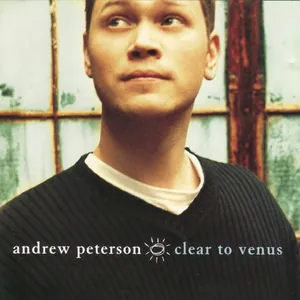
I've heard Venus is really nice this time of year but it pales in comparison to Arizona.
Those of you who are familiar with Andrew Peterson's down-to-Earth folk style will know what the above sentence means. The Florida-born singer/songwriter, who developed a commendable independent following before being taken under the wing of Caedmon's Call and their newly formed Watershed Records, is a rare find. He can take a style of music that often sounds slow, sparse, and redundant in the hands of amateurs (let's face it, the acoustic guitar is by far the easiest instrument to pick up), and transform it into a lush soundtrack that just begs to be taken on long road trips far from civilization. It's rare that an artist who composes mostly slow to mid-tempo songs will thoroughly impress me on first listen. Andrew Peterson did just that about a year ago with his label debut, Carried Along. Every song on that album took some permutation of the folksy instruments in Andrew's arsenal (and those of his cohorts Jamie and Gabe), and blended them together to tell a great story or simply to praise God. Banjos, accordions, fiddles, even a hammer dulcimer - all of these things revolved around a guitar or two to effectively awaken the ghost of Rich Mullins. At times the similarities were uncanny, but I couldn't complain - Rich is sorely missed in Christian music these days. One particular song that even mentioned Rich by name really caught my attention - "Nothing to Say". Its depiction of being awestruck by God's creation during a long drive that Andrew and Jamie took through Arizona struck a chord with a lot of people. Since then, I've been wondering if Andrew could top it.
Clear to Venus being Andrew's sophomore release, part of him felt the need to do what many songwriters do the second time around, and experiment a little with his sound. I was torn over this at first - I wouldn't say that anything on this album falls entirely outside of the "folk" category, but he has managed to push the envelope with a little pop influence here and maybe even an electric guitar if you listen carefully. The result is still very good, but just a little less "earthy" than the first time around. Andrew wasn't afraid to let the guitar take a back seat in a few songs. The change may not be as evident as in Caedmon's Call's Long Line of Leavers, which perturbed a lot of their fans, but it's clear at first that this record is slightly less cohesive than the last one.
Don't get me wrong, though - the trip to Venus is worth it. One thing that hasn't changed - it may have even improved - is Andrew's songwriting. The man is clever, and very observant. He knows how to get an interesting theological point across in layman's terms. He's the kind of guy who wants you to feel like you know him personally when you're listening to one of his songs. Little comments in the album's liner notes, informing us of where and when most of these tunes were penned, adds a great deal to the personality behind the music. As for the Rich Mullins comparison - still valid. I wouldn't want to say that anyone could fill the hole Rich left, but Andrew's doing a pretty good job of carrying the torch, whether he realizes it or not. Those of you who loved Rich will be pleased to know that one of his unfinished songs was recorded for this album. And plenty of Rich's spirit is evident in the wit of many of Andrew's original compositions. It's kind of like getting a new puppy after your old dog passes away. The new one's so cute and reminds you of the old one in a lot of ways - but things will never be exactly the same again. I shouldn't take the analogy too far. Andrew has other influences too, you know. Caedmon's Call is an obvious one. Perhaps Chris Rice is a good comparison. He's likely traded a few tricks back and forth with tourmate Bebo Norman (who apparently took a more drastic turn towards pop on his latest release, but I haven't heard it yet, so I can't comment). Those who have loved folk music from back before Rich and his Ragamuffins blessed us with their presence will likely identify a lot of other artists outside of the Christian bubble that Andrew summons up on this record. But enough with the comparisons. Let's talk about the songs.
"No More Faith"
I think Andrew overheard my wish for another song as powerful as "Nothing to Say", because the very first thing you hear when you pop this CD in is Andrew singing, "This is not another song about the mountains". I don't know if that's meant to be a reference to his first hit single or not, but this one stands on its own as a great tune with a very deep meaning. The song suggests that faith and hope are things that we only need here on Earth, things that will be completely unnecessary when we reach Heaven, because there will be nothing left to hold out hope for. It's one of those things that's terribly obvious when you think about it, but makes you wonder why you never thought of it before. At least, I think it's profound. In any case, the music creates a similar mood to "Nothing to Say", with a guitar and dulcimer interwoven with each other to make for a slow but captivating start. Definitely one of the most brilliant examples of songwriting to come out of Nashville in the year 2001.
Have you heard it said that Jesus is the answer / And thought about the many doubts you hide / Have you wondered how He loves you / If He really knows how dark you are inside
"Mary Picked the Roses"
This is the aforementioned unfinished Mullins song. Apparently Rich had a few bits and pieces of songs that he was tinkering with before his death in 1997, and Rich's family has passed some of that work out to a community of artists that they feel Rich would have wanted to record the songs in his absence. Or something like that. Andrew and Gabe basically took Rich's words and composed a melody to fit. The style seems deceptively simple at first - the verses are slightly repetitive, much like "Hope to Carry On" (which Caedmon's actually covered before Rich died, but that's another story), comparing the handiwork of Biblical characters (Jesus' earthly parents, actually) to the handiwork of God. Joseph carved a table, Jesus made the tree - you get the idea. It's almost spooky to hear the final verse, in which Rich states (through Andrew of course) "I will soon be leaving, but I leave for you my songs." I might find this song's placement as track two to be a minor flaw, but given the mellow nature of most of Andrew's stuff, that probably couldn't have been avoided. It was probably placed near the beginning because it was Andrew's tribute to Rich, in a way.
Though this life is fleeting / And time is no one's friend / I will soon be leaving / But Jesus never ends
"Isn't It Love"
This tune manages to scream "hit single" without losing any of its folksiness whatsoever. Part of it is simply due to the fact that it's the most upbeat song Andrew's done so far. It starts out as a humorous account of Andrew goofing up and misplacing his luggage in Kalamazoo (which is where he wrote the song, likely while he was waiting to get his stuff back and had nothing better to do) and goes on to describe his sinful nature and marvel at the stubborn ways in which God loves him despite all that. Andrew and Gabe likely had a lot of fun jamming on their guitars during this one - with a little bit of twang, it could be a country song, but that's not quite Andrew's style. It's got some fun chord changes and a nice little acoustic solo, for those of you who are guitar players. Andrew actually manages to score himself a spot as a hidden track on WoW 2002 with this one, which is great, though personally I'd say shame on the Christian music industry for not making him one of the main acts!
Isn't it love to look down from the sky / And see Your only Son on the cross, asking why / And somehow let Him die that way / And not call the whole thing off
"Song and Dance"
While this track isn't as interesting to me musically (it's mellower and kind of floats along without as much of a standout tune as the last few songs), any song about King David is going to get my attention, especially when it talks about his tenure as a songwriter. Andrew obviously relates to David in much the same way I do, and here he paints a vivid picture of David trying to pen words to describe the way nature around him seems to be praising God. Andrew lists Psalm 98 as the basis for the song, so he's probably paraphrasing a lot of the same thoughts that went through David's mind back in the day. A cello and a dobro help to flesh the song out a little (there's almost always something other than a guitar to keep things interesting), but I still don't find this one as musically solid as some of the others.
Well, the cadence of the sea is just as steady / And the chorus of the hills is just as strong / And the faithfulness of God is just as mighty as it was / When the shepherd slew the giant with a stone
"Loose Change"
Appropriate to the title, this song has a more "loose" musical feel to it - very light and playful. This time out, Andrew's singing about life from the point of view of a coin. Apparently not a coin that appraises for a whole lot of value, either. Without spelling out his analogy, he goes into all sorts of ways that loose change gets tossed around and not really thought about all that much, but he ends up making a great comparison to the Biblical parable of the woman who lost one of her coins in Luke 15. It's a cute song - perhaps I could do without the cheesy "yeah yeah"s that Jamie provides (her background vocals normally have better effect) - but I won't hold that against either of them.
I can't pick myself up off the ground / I've been face down and pushed aside / Well, you know I'd rather just turn tail and run / Than lie here in the sun and watch you pass me by / 'Cause I ain't worth a dime
"Hold Up My Arms"
This one really threw me for a loop - the production makes it sound much more like a typical pop/rock tune. Drums and electric guitars are much more noticeable than any other time Andrew's put them to use. It's still pretty tame by the standards of most of the other music I listen to, but on an Andrew Peterson record, it's almost a jarring change in mood. The song has an upbeat mood about it, even though it's about Andrew letting his wife down. He's basically asking her not just to understand that he still loves her despite his mistakes, but that he needs her to help him stay strong and be faithful - to "hold up his arms" like some of Moses' followers did when he was praying over an excruciating battle. The song seems a little cheesy at first, but it's charming and very catchy, so it's still a winner.
Girl, I'd be lying if I promised you / That every word I every said was true / But I can promise you this / That I'll do my best to try and do my very best for you / It's the very best that I can do, it's the best I can give
"Steady as She Goes"
Andrew wrote this one a while back, but composed the music fairly recently. (Apparently he writes like I do.) It's another mellow song, but it's filled out a little more than the typical folk song, with soft drums, a piano, and even a touch of electric guitar. Background vocals from Jamie and Gabe make for a really strong chorus. The song is about persevering through trials - Andrew's analogy this time compares him to the captain of a ship. There's just enough minor-key stuff that appears to be going on to keep the melody an interesting one - it was one of the first slower songs on the CD to really stand out to me.
Well, I wonder, am I really stout-hearted enough / 'Cause the ocean is rolling and these waters are rough / There's a storm cloud brewing in the sky above / So let my vessel be sturdy, let my anchor be tough
"Let Me Sing"
This is another old song for Andrew - I believe it first appeared on his independent CD Walk. Not too much has changed in this version - it's still based almost entirely around the piano, with a slight touch of cello to add emotion. No guitar this time! It almost has the flavor of an old hymn - no "thee"s and "thou"s or anything - but Andrew's attitude is very reverent. He sings about wanting people to see God in his flawed existence, and he seems genuinely passionate about reaching the lost. The chorus has a clever way of turning lyrical corners by reusing the word at the end of one line to start off the next thought. Still, I do get slightly bored with this one from time to time - probably just my bias toward the guitar. It's interesting to note that he composed it on Valentine's Day 1996. Not sure if there's any significance to that.
When this lisping, stammering tongue / Lies silent in the grave / Then in a nobler, sweeter song I'll sing Your praise
"Alaska or Bust"
Well, it seems that Andrew sets forth to write at least one song about a state on every album. This tune doesn't try to recapture the Arizona magic or anything - it's a more whimsical-sounding straight-up folk tune about an old man who's always wanted to see Alaska, and now he's telling his wife that they're finally going to travel there, and they're leaving now. It actually makes me think of Fastball's hit song "The Way" in that respect, except this story is more specific because hey, folk singers can be as specific as they want. The dominant accordion and Andrew's take on the nostalgic ramblings of an old man almost betray the sad tone that the song takes on when you find out exactly why the poor guy's in such a hurry. It's not as much of a tear-jerker as your average country ballad, but it's a healthy reminder to seize the day.
I've been holding down this farm that daddy left me, darlin' / The kids have married off and moved away / And the doctor says I'm healthy for an old man dyin' / I'm well enough to seize a few more days
"Venus"
The album's title tracks starts off with a piano melody that's almost deceptively similar to "Let Me Sing", but other instruments join in to fill the song out a little more. The title is actually deceptive - the song's not really about outer space. It's a traveling song, and Andrew's just exaggerating about all the crazy places he's had to play shows over the years. It's a chronicle of his life on the road as part of the little collective he and Jamie and Gabe make up, sung as a lullaby to his newborn son. It's very slow - probably not a good song to listen to during the 5 AM drive during which Andrew apparently began to compose this one - but I suppose it would do if you had sleeping children in the car.
Well, your mama's got her eyes on you, and mine are on the road / And Gabe's are staring off at Kansas City / We'd all swear that it's a precious view that's seen by such a precious few / And it'll change you just as sure as it is pretty / But that ain't a bad thing
"Why Walk When You Can Fly"
The album ends on an upbeat note with a fairly faithful rendition of a song Mary Chapin Carpenter wrote and recorded a few years back. It starts off a capella, which really shows off the vocal richness that these three can create together - and some slightly bluegrass-style finger-picking joins in later to give the song a feel not too far removed from Southern Gospel (especially with its no-frills format of three nearly identical verses). It almost seems strange to end on a faster song, but wait there's more.
In this world there's a whole lot of golden / In this world there's a whole lot of plain / In this world you've a soul for a compass / And a heart for a pair of wings
"Land of the Free"
I was excited to find out that there was a hidden track on the record - no reviews I read had mentioned it, and I honestly wasn't expecting it since I didn't expect Andrew to be the type to stash something more off-the-wall at the end of a disc for the more faithful listeners. (The whole "hidden track" thing seems to me to be more of an "alternative" trend, but maybe that's just me.) The music seems a bit silly at first, since the usual acoustic guitars are replaced by what sounds like a ukulele - maybe Andrew was just fooling around with an unusual instrument, working on an unfinished song, and this was the result. Interestingly, this song has some of the best lyrics on the record - taking the form of a letter that Andrew is writing to a missionary friend in South America. He's wondering if the people down there complain about everything the way Americans do, and he succeeds in making another statement as profound as the song that started the album off when he admits that he wishes he wasn't so tied down to his possessions, and he was more of a free spirit like his friend down under. I guess it hits close to home since a lot of these thoughts went through my head after September 11th (which was actually the release date of this album), but in any case, I'd go so far as to say it's one of Andrew's best songs yet, and therefore you shouldn't be duped into buying this album on cassette!
And I'm just a little jealous / Of the nothing that you have / You're unfettered by the wealth of / A word that we pretend is gonna last
Andrew Peterson's music may not be for everyone - his touch is very gentle, and a lot of fans who are college-age or younger may prefer the more robust sounds of folk/rock acts like Caedmon's Call or Jars of Clay, but this works perfectly for me when I need to mellow out. Andrew's voice can be a bit nasal at times, and that combined with the choice of instruments can make the music sound a little "nerdy" at times if you're not used to it. It's definitely not for people who are scared off easily by anything that sounds remotely rural. It's good traveling music (it may be totally inappropriate for driving in L.A., but part of me would really love to crank this baby up really loud and drive through an urban neighborhood with my windows down just to get a reaction). People who love the acoustic guitar and who love chewing on little bits of theology communicated through clever songs that your average Joe can relate to will definitely love this CD. I highly recommend it - though if you haven't heard Carried Along, I'd start there.
David's Score: 4/5
Similar sounding releases
 2004Caedmon's CallChronicles
 2000FFHFound a Place
 2004Justin McRobertsIntersections
 2002Glenn KaiserNo Greater Love
 2004Carolyn ArendsUnder the Gaze
 1997Sherri YoungwardFaces Memories Places
More from Andrew Peterson
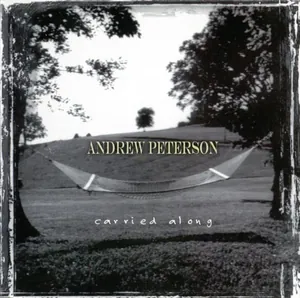 2000Carried Along
 2003Love and Thunder
 2004Behold the Lamb of God: The True Tall Tale of the Coming of Christ
 2005The Far Country