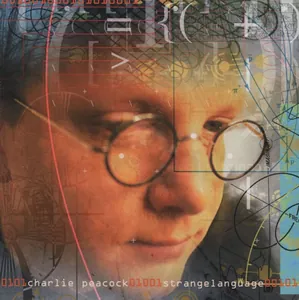
With strangelanguage, Charlie Peacock takes an "everything but the kitchen sink" approach to album making. Known for his willingness (penchant) to experiment, Peacock has taken everything he's ever tried, put it into a blender, and then fused together the resulting bits and pieces for this effort. Those who are strictly familiar with his Sparrow work (Secret Of Time, Love Life, and Everything That's On My Mind) may think he's found a new recipe; however, those of us who have listened to Peacock since the beginning (his Exit Records days) should notice familiar flavors. Adding an even greater nostalgic trace to strangelanguage are the ingredients Peacock has drawn from the not too distant past. Leave it to Charlie Peacock to go into the pantry and take everything he could find on the shelf to create a savory concoction.
Retro-tinged and undeniably alternative pop, strangelanguage is very layered, strongly keyboard driven, and has an 80's taste (in the same vein as old Peter Gabriel and Simple Minds, back when they were considered "alternative"). The keyboards move with the beat, bass and a variety of guitars flesh out the sound, and various other instruments fill-in as needed (Bouzouki, Indian dulcimer, flute, saxophone, harmonica, even strings). Even a smidgen of distortion seasons the mix. The title track has a Sting-ian feel (even in Peacock's vocal delivery and phrasing), while lyrically it's redolent of the Swirling Eddies' "I Had A Bad Experience." The album's musical highlight, "Lady Soul (Aretha In The AM)," is a wonderful (no additives added) Motown morsel, which pays fitting and loving tribute to Aretha Franklin.
Taken as a whole, the keyboard texture and structure of strangelanguage is remarkably reminiscent of Todd Rundgren (Brent Bourgeois, the mainstream veteran and Christian music newcomer, contributes backing vocals on two tracks. Bourgeois is considered Rundgren's prodigy-perhaps he's had a significant sonic and stylistic impact on Peacock). Overall, Peacock continues to demonstrate his talent as a well-versed and capable tunesmith.
What gives Peacock's work its alternative edge is the lyrics. Typically, pop writers spell out their messages, whereas alternative artists are more abstruse, communicating meaning subtly through both their word and instrumentation choice. On strangelanguage Peacock tackles such topics as the gravity of our sin nature ("Insult Like The Truth"), the reality of God's grace ("That's The Point"), and the danger in relativistic thinking ("Struck Blind") with delicacy, nuance, and aplomb.
Arguably the most provocative cut on the project is the somber yet seductive, "Rocket." Peacock uses a personal approach to address the temptation to cast stones at a fallen brother or sister; his manner is as disarming and unsettling as Jesus' with the Pharisees. re:think label mate Sarah Masen joins Peacock for this admonition:
And when my eyes have seen enough And my tongue has rambled on... Maybe then I'll love mercy More than being right Maybe then I'll show mercy
The most fitting description I have heard for Peacock's writing is "thinking man's pop"-clearly he has grappled long and hard with each topic included on his albums, so he's careful not to offer pat answers.
strangelanguage may not be the most original or refined work that Peacock has ever done. But, like goulash, it is a tasty and tangy combination of styles and influences. As ever, Charlie Peacock offers plenty of food for thought as well as a buffet for the ears.
Other coverage for this album
The Lighthouse February 1997Reviewed by Terry Babbeystrangelanguage is Charlie Peacock's first release under his own label re:think. So what kind of results should you expect from an artist when he has no one to answer to but himself? Where does all this freedom allow a musician to go? This was only my second exposure to Charlie Peacock's music. Due to all the praise I saw on the Internet, I purchased Everything That's On My Mind about a year ago.…7ball #7Reviewed by Dan MacIntoshCharlie Peacock's new release strangelanguage, an album that has more spunk and fire than Peacock has shown since the old days, when he was "alternative"--especially with the surprising, Peter Gabriel-meets-industrial experiment on "Struck Blind"--proves that his relevancy never had any reason to be questioned. Though he may be known for his work as producer with such artists as Margaret Becker…More from Charlie Peacock
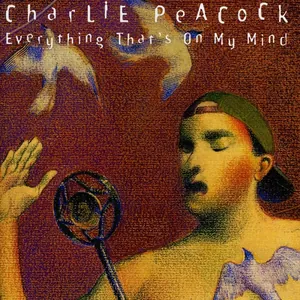 1994Everything That's on My Mind
 1999Kingdom Come
 2004Full Circle: A Celebration of Songs and Friends
 1990The Secret of Time
 In the Light: The Very Best of Charlie Peacock